Do not ask an AI model what is going viral in your niche.
It will give you a confident smoothie made from old trend reports, generic psychology, and things that sound true.
Give it the posts.
Give it comments, reviews, screenshots, dates, metrics, your own losing creative, and a job narrow enough to verify.
That is where Claude Fable 5 becomes useful for AI UGC research. Anthropic positions Fable 5 for long-running knowledge work and vision-heavy document analysis. Those capabilities fit creative research, where the input is messy and half the evidence is visual. Check Anthropic's current Fable 5 page for availability and product details because model access changes faster than this workflow.
The workflow below is less exciting than "find me viral ideas."
It also produces briefs I would actually let a team make.
The rule: evidence, interpretation, decision
Keep these as separate columns.
| Layer | Example |
|---|---|
| Evidence | 17 of 63 comments mention forgetting renewal dates |
| Interpretation | Renewal anxiety may be stronger than monthly price anxiety |
| Decision | Test three renewal hooks against the existing subscription-audit format |
Models blur these layers if you let them.
"People hate subscriptions" might be an interpretation.
"17 comments used the words forgot, surprise, or renewal" is inspectable evidence.
"Make a reaction video" is a decision.
Your research output should make it obvious which one you are reading.
Build a research pack, not a mega-prompt
I use a folder:
00-brief.md
- product;
- customer;
- market;
- objective;
- channel;
- decision due;
- what the research must not decide.
01-product-truth.md
- what the product does;
- what it does not do;
- proof links;
- current offer;
- approved language;
- forbidden claims.
02-audience-language.csv
One row per comment, review, support ticket, or interview fragment:
03-competitor-posts.csv
Do not invent missing metrics. Blank is better than fake precision.
04-creative-screenshots
Name files with their post ID and slide or frame:
Fable can inspect images. The filenames make the visual evidence joinable to the row.
05-our-performance.csv
Use the actions you can actually measure:
- hold or early watch;
- completion;
- saves;
- shares;
- comments;
- profile visits;
- clicks;
- signup or purchase when attribution supports it.
06-claims-and-rights.md
What is licensed, who approved likeness use, what commercial claims are allowed, and which source assets are research-only.
This stops a competitor screenshot from accidentally becoming your published creative.
Pass 1: extract observations without strategy
The first model pass should be boring.
Prompt:
Why separate extraction?
Because if the model starts recommending while reading, it will pay more attention to evidence that supports its first clever idea.
Extraction builds a ledger. Strategy comes later.
Pass 2: cluster audience language
Now group the observations.
Prompt:
Frequency and intensity are different.
Twenty people saying "I forget renewals" is frequent.
Two people saying "this caused an overdraft before rent" is intense.
Both may deserve a test. Do not let a count erase the pain of a smaller segment.
Example output:
| Cluster | Distinct sources | Strong phrase | Tension |
|---|---|---|---|
| Surprise renewals | 17 | "I forgot the annual renewal again" | Low attention, sudden charge |
| Tiny recurring charges | 11 | "None of them are expensive alone" | Individually harmless, collectively painful |
| Shared subscriptions | 6 | "We both thought the other cancelled it" | Ownership ambiguity |
That table is already more useful than "money-saving content performs well."
Pass 3: tear down the creative
Do not ask why a post went viral. You rarely have enough evidence to know.
Ask what the post did.
Here is a first-party slideshow frame:
 01
01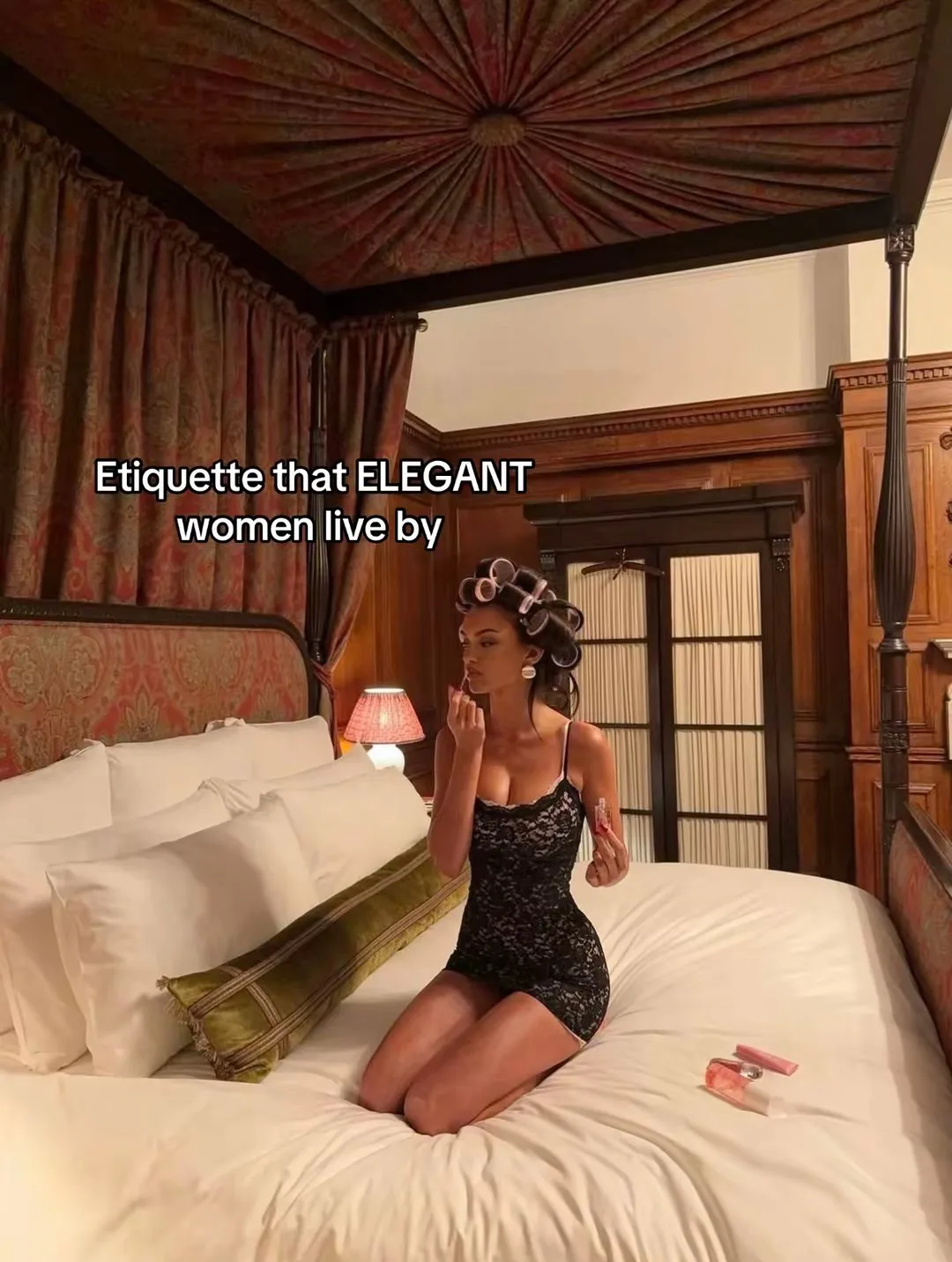 02
02 03
03A visual teardown should identify:
- exact first-slide text;
- number of words;
- text position;
- contrast;
- subject;
- camera distance;
- implied audience;
- curiosity gap;
- promise;
- what slide two must answer.
Prompt:
"Pretty beach image" is description.
"The ordinary-life confession over an aspirational background creates tension" is interpretation.
Keep both. Label them.
Pass 4: find repeated structures
One high-performing post can be luck.
A creator repeating the same structure is more interesting.
Ask:
You are looking for molds:
- confession → mistake → method → save CTA;
- reaction → screen proof → result;
- ranked list → surprising number one → comment prompt;
- before → mechanism → after.
The words and proof should be yours.
Pass 5: compare the market to your own account
This is where most competitor research goes wrong.
The model finds a structure somebody else uses and recommends it because it exists.
Existence is not a reason.
Compare it against:
- your audience language;
- your product truth;
- your past performance;
- rights;
- production capability.
Prompt:
This blocks pretty competitor content from becoming a useless brief.
Pass 6: write hypotheses, not ideas
Idea:
Make a slideshow about subscriptions.
Hypothesis:
A first-slide hook naming annual renewals will earn more saves than a generic subscription-saving hook because 17 audience sources describe forgetting the renewal date. Hold the six-slide audit format and avatar constant.
Now the content team knows:
- audience tension;
- format;
- variable;
- comparison;
- intended signal.
Give the model this schema:
If a field is missing, the idea is not ready.
Pass 7: convert the hypothesis into a Ghostfeed brief
Example:
That can go directly into a slideshow or reaction production workflow. In this setup Claude has Ghostfeed MCP connected, so the brief should also name:
- the Ghostfeed workspace;
- the opening pose the hook requires;
- whether to preserve an owned motion or direct a new one;
- the approved avatars to cast;
- the first-frame rejection criteria;
- the real product proof asset;
- the budget and explicit approval gates.
For a reaction, Claude searches workspace templates before the inspiration library. If it imports a 30–120 second source, it returns the dashboard link so I can choose a crop or run Smart Crop. It renders the requested first frames and stops. Only after I approve a frame does it use clone or prompt mode.
Research has now terminated in an asset request.
The daily review
Do not upload yesterday's metrics and ask the model to "analyze performance."
Ask narrow questions:
- Which hypothesis ran?
- Which variable changed?
- What was the intended action?
- Did the signal move against the control or account baseline?
- What evidence supports the next decision?
Prompt:
This gives you a production brief instead of an analytics horoscope.
What Fable 5 is good at here
In my use, the valuable capabilities are:
- holding a long evidence chain together;
- reading screenshots alongside structured rows;
- applying the same extraction schema many times;
- finding contradictions across sources;
- producing a reviewable artifact instead of a chat answer.
Anthropic describes Fable 5 as a model for ambitious long-running knowledge work and vision analysis. That supports the shape of this workflow. It does not prove any marketing conclusion for you.
The audience still gets the final vote.
What not to upload
Do not paste raw customer data because a model has a large context window.
Remove:
- names;
- emails;
- phone numbers;
- account IDs;
- payment information;
- private support attachments;
- health or financial details not needed for the analysis;
- client secrets.
Anthropic's Fable 5 page currently states that using the model requires 30-day data retention for safety monitoring. Check the current policy and your organization's agreement before uploading client material.
The safest research pack contains anonymized phrases and the minimum evidence needed for the decision.
The no-slop test
Reject the research output when it contains:
- conclusions without source IDs;
- invented metrics;
- vague audience labels;
- "leverage," "unlock," or "tap into" instead of a concrete action;
- three neat clusters because three looks nice;
- a recommendation that ignores product proof;
- a copied competitor hook;
- a "winner" based on one outlier;
- strategy that cannot become a test.
The model should reduce the pile without hiding the uncertainty.
That is the standard.
Claude Fable 5 can process more of the research loop in one coherent job. Ghostfeed can turn the resulting brief into reactions, avatars, and slideshows. Neither one supplies the customer truth.
You still have to collect it.