A 2D cartoon ad explains a product with a flat drawn character: black outlines, a few colours, a plain background. Sometimes the product itself is the character and talks. Brands are running it right now as an AI-made ad. On November 17, 2026 we counted 12 clearly AI-made 2D cartoon ads from 6 brands in the Meta Ad Library. You can make a 45-second one in Ghostfeed for about 49 credits, around $4.90.
Below: what the real ads look like, our own example, the steps, the cost and the limits.
Made with GhostfeedThe lock box in this reel, Phonook, is an example brand. It is not a real product.
The pictures and clips in this reel were generated with Pruna AI models, called directly and following the steps of Ghostfeed's workflow: P-Image for the first pictures, P-Image-Edit for the pictures made from them, and P-Video 2 Pro for the clips.
What a 2D cartoon ad is
It is the cheapest-looking format on purpose. A flat cartoon reads in one second, works with the sound off, and does not pretend to be a filmed ad.
People call it "AI cartoon ads", "animated ads" or "cartoon characters". When the product talks, we call it a mascot ad. That is our word, not a name we saw in use.
These ads run on Meta (Facebook and Instagram). That is where we counted them.
How many brands run it
These are our own numbers, counted on November 17, 2026 in the public Meta Ad Library. We looked at ten frames across each ad, not at the first picture.
| What we counted | Number |
|---|---|
| Ads we looked at | 15 |
| Clearly AI-made | 12 |
| Likely AI-made, not counted | 2 |
| Not AI | 1 |
| Brands behind the 12 | 6 |
| Supplements | 7 of 12 |
| Apparel | 2 of 12 |
| Pets, foot pain, joint pain | 1 each |
The 6 advertisers, named as the Ad Library shows them: Arianna Lopez, Foot Health Digest, Koprez, Nutrition Geeks, True Nutra and UndrDog.
Three things worth knowing about these numbers:
- The sample is small and hand-picked. We found these through two brand pages, two brand names from other write-ups and one hook phrase. 5 of the 12 are from one brand, Nutrition Geeks.
- Clean cartoons are hard to call. One flat stick-figure ad could be ordinary vector animation, so we left it out. What gives the others away is drift: a face, an outfit or a dog's breed changes from shot to shot, or the text on a label is garbled.
- The Ad Library shows no spend and no views. We can say an ad is running. We cannot say how well it does.
The 12 2D cartoon ads we found
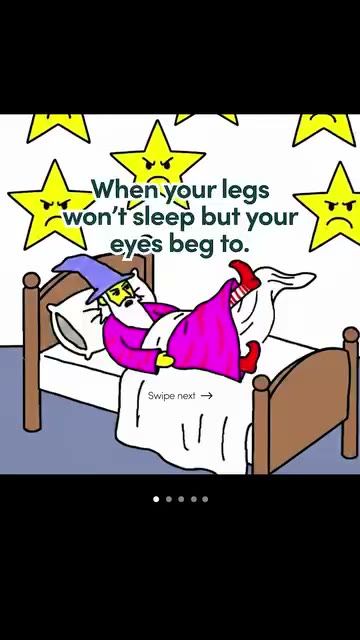
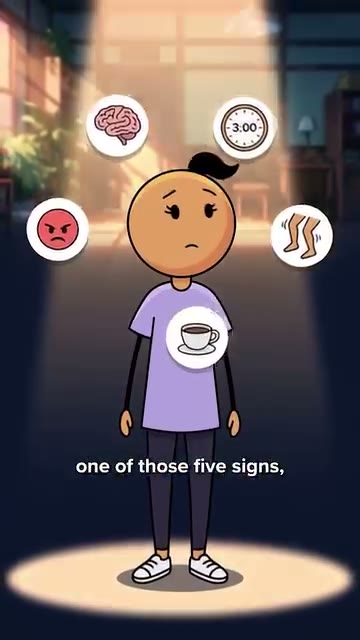
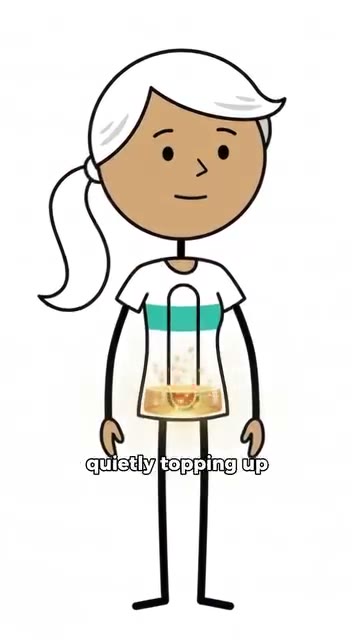
Every ad in the count above, as the Meta Ad Library showed it on November 17, 2026. Tap a picture to open the ad in the Library.
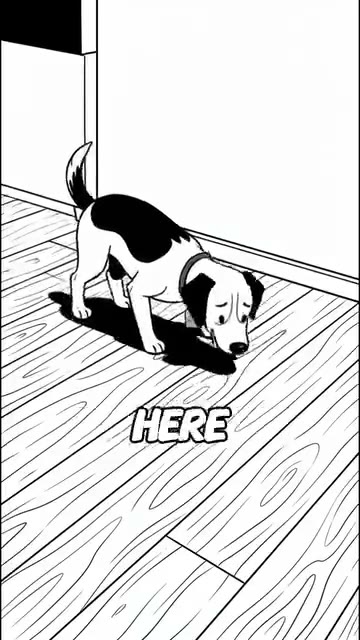
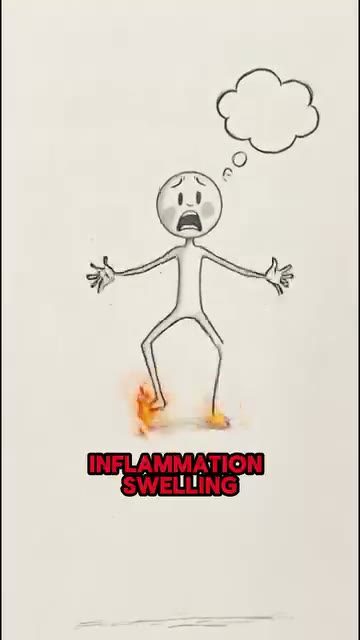
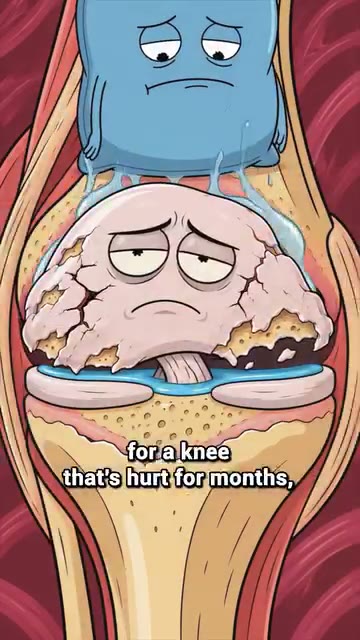
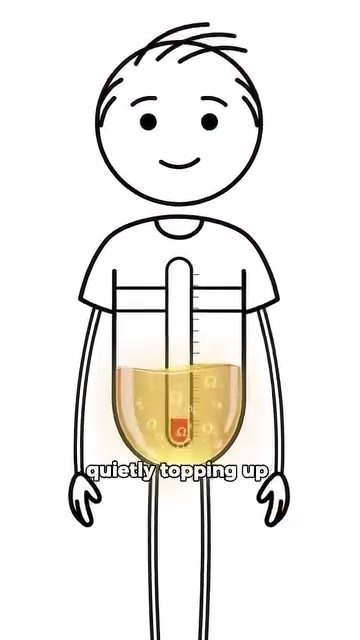
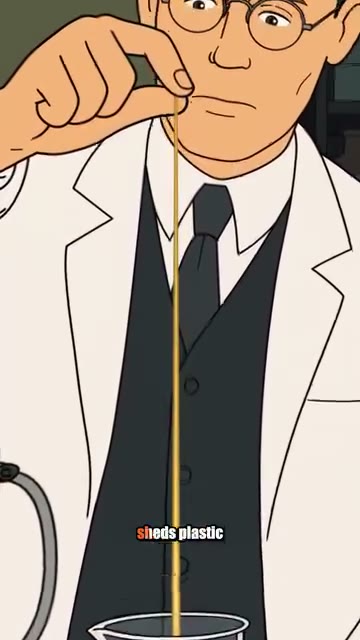
How the real ads are built
Length
The shortest of the 12 is 21 seconds and the longest is 4 minutes 16 seconds. The middle one is 58 seconds. Only 1 of the 12 runs 35 seconds or less.
Five looks
- A flat figure on white. Nutrition Geeks, 54 seconds, a 30-day question with a day 7 and day 30 calendar.
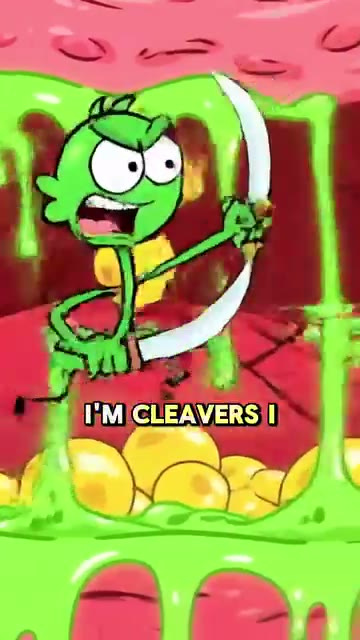
- TV-cartoon style. Koprez, 4 minutes 16 seconds, where the cartilage and the fluid in a knee have faces and talk.
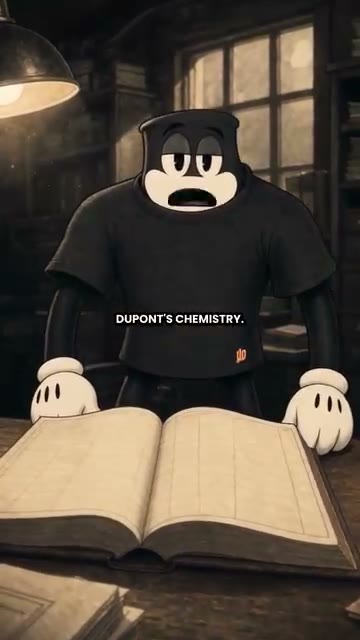
- A 1930s rubber-hose mascot. UndrDog, 2 minutes 5 seconds, where a t-shirt with gloves explains the fabric.
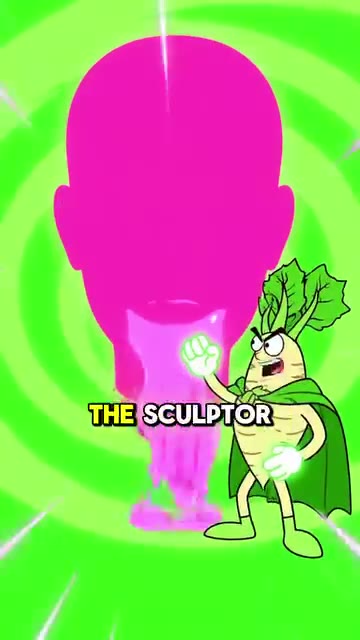
- Flat mascot heroes on neon backgrounds. True Nutra Plus, 59 seconds, with a talking pouch and ingredient characters.
- Pencil or line-art sketch. Arianna Lopez, 58 seconds, black-and-white line art with one red product.
The hook and the device
The most common device is that the product or a body part talks. 4 of the 12 use it: the two True Nutra pouches, UndrDog's t-shirt and Koprez's cartilage. A "what happens if you take it for 30 days" question opens 2 of the 12.
Shots and pace
We measured Nutrition Geeks' 54-second ad shot by shot:
- About 17 shots in 54.3 seconds.
- The hook is a bold black question at the top of the frame for the first 5.4 seconds, over a close-up of the character holding the product.
- A calendar icon with the day number sits above the character: 7, then 30.
- Flat cartoon, black outlines, white background, grey line-art furniture.
- Captions are small white text with a black outline, 2 to 4 words, in the lower third.
- It cuts away to things without the character: a jar, a glowing capsule, a chart.
How the product shows up
In that ad the product is in the hook, shows up as glowing effects inside the body, and comes back as two packs and a button on a white end card.
Our example: a 45-second 2D cartoon ad
We made the reel at the top of this page for an example brand, Phonook, an invented timed lock box for a phone. It is not a supplement on purpose, so the script makes no health claim.
| Our reel | |
|---|---|
| Length | 46.2 seconds, vertical |
| Shots | 20: 10 clips, 9 closer crops and an end card |
| Voice | One narrator, 117 words |
| Hook | A question at the top for the first 6 seconds, over the man holding the box |
| Ladder | A calendar icon: day 1, 7, 14, 21, 30 |
| Character | One man with the same hair, glasses, hoodie and trousers in every clip |
| Product | In all 10 clips, then on a white end card with a button |
One thing ours does that the real ad does not: the character stays the same in every shot. In the real ad her outfit changes between shots.
How we made this reel, step by step
This is the whole process, in the order we did it, with the real pictures and the real prompts. Long prompts are trimmed with "…".
One thing to be clear about: we generated the pictures and clips by calling Pruna's models directly, and the music through Ghostfeed. The look follows Ghostfeed's 2D cartoon skill.
1. Study one real ad
We measured Nutrition Geeks' 54-second ad from the saved file and set ours beside it.
| The real ad | Our reel | |
|---|---|---|
| Length | 54.3 seconds | 46.2 seconds |
| Shots | About 17 | 20: 10 clips, 9 closer crops made in the edit, 1 end card |
| Hook | A bold black question at the top for the first 5.4 seconds, over a close-up of the character holding the product | A question at the top for the first 6.0 seconds, over a close-up of the man holding the box |
| Ladder | A calendar icon with the day number above the character: 7, 30 | A calendar icon at the top left: 1, 7, 14, 21, 30 |
| Look | Flat cartoon, black outlines, white background, grey line-art furniture | Flat cartoon, black outlines, white background, some furniture filled with colour |
| Character | A flat cartoon woman. Her outfit changes between shots | One man with the same hair, glasses, hoodie and trousers in every clip |
| Captions | Small white text with a black outline, 2 to 4 words, lower third | The same layout, in our own font, 45 caption lines |
| Product | In the hook, as glowing effects inside the body, then two packs and a button on a white end card | In all 10 clips, then the box, the name and a button on a white end card for the last 2.7 seconds |
Two things we could not measure. The real ad's voice was not transcribed, so we have no word count for it. And the shot count is "about 17" because scene detection found 19 changes and some of them are effects, not cuts.
We copied the structure only. The brand, the product, the character, the words, the colours, the font and the end card are all different.
2. Write the script
117 words, for one narrator:
What happens if you lock your phone in a box for one hour every evening, for thirty days?
Day one. You set the dial, the lid clicks shut, and it feels a little silly.
Ten minutes in, your hand is still patting an empty pocket.
Day seven. The itch fades. You open the book that's been waiting since spring.
Day fourteen. You cook something that takes longer than ten minutes.
Day twenty-one. Dropping the phone in is just what you do after work.
Day thirty. The hour ends, the lid pops open, and you don't even notice.
Same phone. Same you. One quiet hour back, every evening.
That's Phonook. The little box with a timer. Link below.
It makes no health claim. We sent "Phonook" to the voice as "Fo-nook". The question on screen is shorter than the spoken one: "What happens if you lock your phone away for 1 hour every evening?"
3. Lock the character and the product
Two pictures that every scene is made from. Both were made with Pruna P-Image at 9:16.
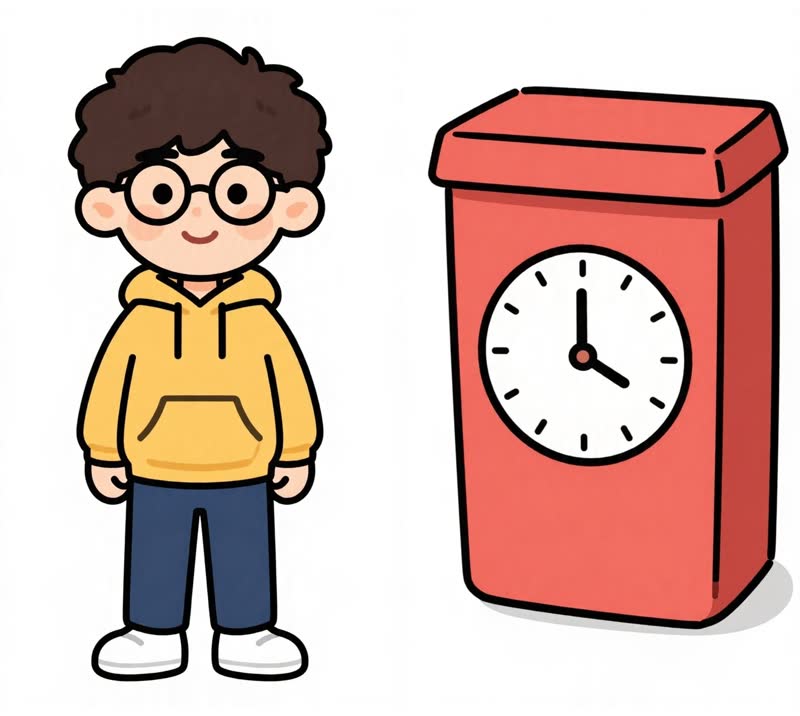 The locked character picture on the left and the locked box picture on the right
The character prompt. We made 3 and picked one:
The box prompt. We made 4 and picked the third. The first two came out as round jars and the fourth as a cube:
4. Make one scene picture per line
Ten scene pictures are in the reel, made with Pruna P-Image-Edit at 9:16 with turbo off. For nine of them the locked character goes in as image 1 and the locked box as image 2, and the prompt tells the model to keep both. The tenth is a closed-lid copy of the Day 30 picture, covered in step 5.
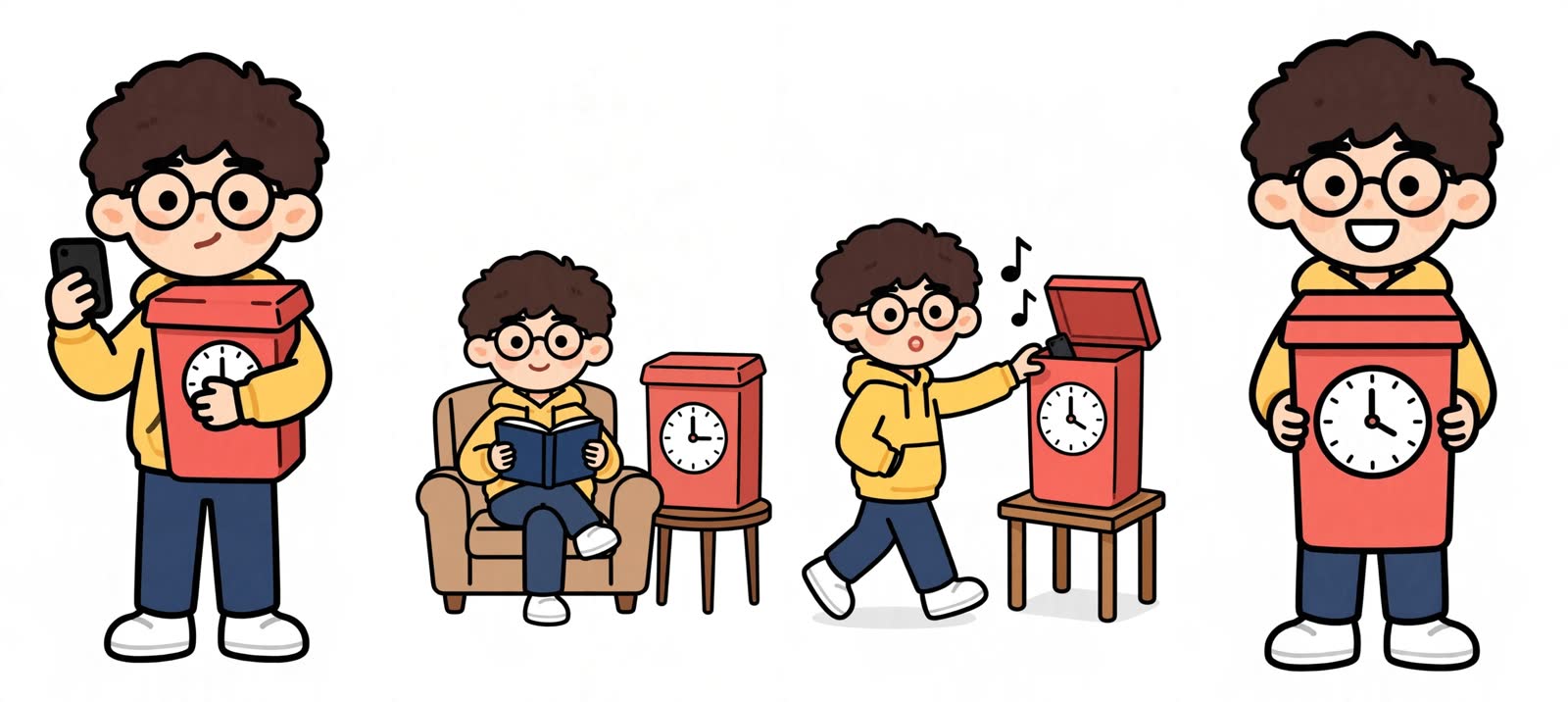 Four of the scene pictures: the hook with the phone and the box, reading on Day 7, dropping the phone in on Day 21, and holding the box up at the end
The Day 7 picture:
Every scene prompt opens with the same sentences about the look, the man and the box. The part after "Scene:" changes. The empty top fifth leaves room for the question and the calendar icon.
5. Turn each picture into a clip
Each scene picture is the first frame of one clip. The model was Pruna P-Video 2 Pro, image to video, at 480p in speed mode, 5 seconds, 9:16. Each clip came back at 480 by 832 pixels, 24 frames a second, 5.17 seconds long.
The third clip, where he pats his empty pocket:
Every clip prompt opens and closes with the same sentences. The camera never moves.
One clip got two pictures. For Day 30 the lid has to pop open on cue, so we made a closed-lid copy of that scene picture and gave the clip the closed picture as its first frame and the open one as its last frame. The prompt for the closed-lid copy:
6. Redo what came out wrong
This reel has one cut. Everything below was redone before it was finished.
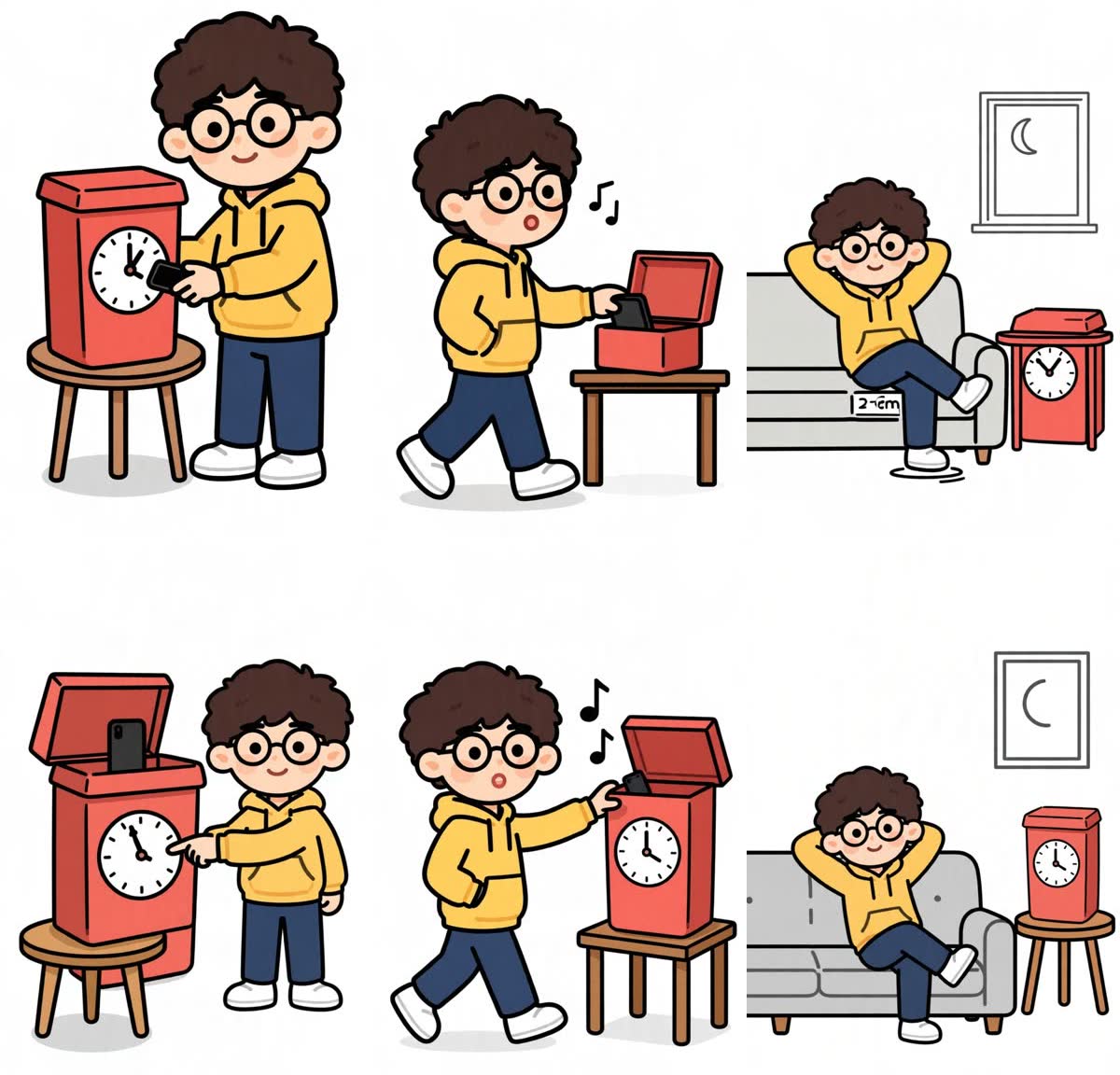 Top row, the first takes of three scene pictures: the Day 1 picture with the lid closed and the phone held against the dial, a low box with no dial, and a box drawn with table legs plus stray text on the sofa. Bottom row, the pictures we kept for the same scenes
Pictures thrown away:
- 3 of the 4 box candidates. Two round jars and a cube.
- The first take of scenes 2, 6 and 8. Our notes list a low box with no dial, a box drawn as a table, and stray text on the sofa.
- Two more takes of scene 2. It was made 4 times and the third is in the reel. The last two were asked for with "clearly taller than it is wide, exactly the proportions of the box in image 2". Our notes do not say why each of the other takes was dropped.
Clips made twice:
| Clip | What was wrong with the first take | The fix |
|---|---|---|
| 2, Day 1 | The box turned squat when the lid closed, and he ended up looking angry | A new picture, and a prompt that says the box "keeps its tall narrow shape" and "He never frowns and never looks angry" |
| 5, Day 14 | He frowned at the pot halfway through | The prompt says he "keeps a happy open smile the whole time" and "never frowns" |
| 6, Day 21 | The camera panned and the box appeared twice | The prompt says "The table and box stay exactly where they are; the camera does not pan or follow" |
| 7, Day 30 | The lid was already open, so nothing popped | A closed-lid first frame and the open picture as the last frame |
The first take of clip 7 was not wasted. Its guitar part is the last 2 seconds of that scene.
No request failed or had to be sent twice.
7. Voice, music, captions and the edit
- Voice. Inworld text to speech, voice Hazel, at 0.92 speed, with word timings. We made three takes: Hazel at normal speed, Casey at normal speed and Hazel at 0.92. Hazel at normal speed ran 39 seconds, which was too fast. The one we used runs 41.3 seconds. Pauses of 0.2 to 0.4 seconds were added before each new line.
- Music. Made through Ghostfeed, 1 credit, instrumental, 50 seconds. The prompt: "Light playful instrumental, ukulele, soft claps, glockenspiel and a bouncy bass, 104 BPM, warm and cheerful cartoon explainer mood, clean simple ad background music". It returned two versions and we used the first.
- Overlays. The question, five calendar icons and the end card are pictures made from web pages, set in Avenir Next.
- The edit. Done with ffmpeg. The clips are timed to the voice. 9 of the 20 shots are closer crops of the same clips. The 480p clips are scaled up to 1080 by 1920 with a light sharpen.
- Captions. 45 caption lines in Avenir Next Heavy, in the lower third.
- Mix. The music sits about 14 dB under the voice.
8. What it really cost us
This is what we paid to make the reel by calling the models directly, counted from Pruna's list prices and the clip lengths that came back. It is our own log, not a bill.
| What | Number | Dollars |
|---|---|---|
| P-Image pictures: 3 characters, 4 boxes | 7 | 0.035 |
| P-Image-Edit pictures: 10 used, 5 thrown away | 15 | 0.15 |
| P-Video 2 Pro clips, 480p speed: 10 used, 3 thrown away | 13 | 1.3429 |
| Pruna total | 1.5279 | |
| Voice, 3 takes of 632 characters | about 0.05 | |
| Music, 1 Ghostfeed credit | about 0.10 | |
| Total | about 1.67 |
The four clips we made twice are $0.41 of that total.
The voice figure is an estimate: 1,896 characters at $25 per million characters, which is $0.0474. We took that rate from our notes on another reel and did not check it again. With the voice at $0.0474 the total is $1.6753.
The same ad priced in Ghostfeed credits is in the cost section below.
9. The finished reel
Made with GhostfeedHow to make one in Ghostfeed
Ghostfeed connects to Claude, ChatGPT, Codex and Cursor through one MCP server. Setup takes a couple of minutes. You ask for the ad in plain words:
The agent reads Ghostfeed's method for the 2D cartoon look and works through these steps.
- Write the words. A question, a ladder of days, one line on the product. About 2.5 words a second.
- Pick the look and the palette. Ours is flat vector with steady black outlines and five named colours: mustard, navy, coral, black and white.
- Lock the character and the product. One picture of each that every scene is made from.
- Make the voiceover first. Its word timings set how long each scene is.
- Make one start picture per line. One subject per scene. Write "2D, no 3D render" in every prompt.
- Turn each picture into a clip. Keep the camera still. For a change that has to land exactly, such as a lid closed then open, give the clip both the start and the end picture.
- Put it together. Join the clips, lay the voiceover and music on top, and add the question, the calendar, the captions and the end card.
What a 45-second one costs
Counting a credit as 10 cents, with today's prices and the settings our reel used:
| Part | Credits |
|---|---|
| The locked character and the locked product, 1 credit each | 2 |
| 10 pictures made from those, 2 credits each | 20 |
| 10 clips of 5 seconds, 50 seconds in all, at 0.5 credits a second | 25 |
| Voiceover, 632 characters (1 credit per started 1,000) | 1 |
| Music, one song request | 1 |
| Total | 49, about $4.90 |
Three notes on that table:
- 0.5 credits a second is P-Video 2 Pro at 480p in speed mode. Flat art holds up at low resolution better than a realistic look does. Quality mode at 480p is 0.75 credits a second.
- The clips add up to 50 seconds for a 46-second ad. A clip is 5 seconds at least.
- Redos cost again. For our reel we made 22 pictures to keep 12, and 13 clips to keep 10. Four clips were made twice.
Ghostfeed is paid, from $29/mo.
Honest limits
What is still wrong with our own reel:
- No cutaway shots. The real ad cuts to a jar, a capsule and a chart. Ours is the man and the box in every shot, so it repeats more.
- The box changes size. It is head-sized on day 1, smaller on the sofa and large in the day 30 close-up.
- Half the cuts are closer crops, not new drawings. The real ad has about 17 different drawings.
- Close-ups are blocky on a desktop. The clips are 480p scaled up, and ten shots are cropped in further.
- The dial is not stable. The pointer jumps between scenes. The motion is simple and a little floaty.
- No offer. The real ad ends on a free-pack offer. An example brand has none, so our end card is a name and a button.
We made this reel at 480p, the lowest resolution, in low-cost settings. Higher-end video models and a higher resolution reduce the picture problems in this list. We have not measured by how much.
What to expect from the tool:
- Each line is its own clip. In Claude Code, Codex, Cursor and the Ghostfeed app the clips are joined into one file. In Claude and ChatGPT chat you get the clips in order and join them yourself.
- The question, the calendar and the captions are added when you ask for them.
- The agent cannot hear the voiceover, so you choose the voice by listening.
FAQ
What is a 2D cartoon ad?
A video ad that explains a product with a flat drawn character or a talking mascot, usually on a plain background.
Do real brands run AI cartoon ads?
Yes. On November 17, 2026 we counted 12 clearly AI-made 2D cartoon ads from 6 brands in the Meta Ad Library, out of 15 we looked at.
How long are they?
In our count the shortest is 21 seconds, the longest is 4 minutes 16 seconds, and the middle one is 58 seconds.
Does it need a mascot?
No. 4 of the 12 ads have a talking product or body part. The others use a person.
How much does one cost to make?
About 49 credits for 45 seconds in Ghostfeed at 480p, around $4.90 at 10 cents a credit, before redos.
Make this format with the Ghostfeed skill
The look on this page is written down as a skill on the Ghostfeed MCP server, ghostfeed-ad-style-2d-cartoon. It covers what makes a 2D cartoon read as hand-drawn: steady outlines, a small named palette, one subject per scene, drawn motion with held poses, and writing "2D hand-drawn animation, no 3D render" in every prompt. It also lists four sub-looks to pick from: flat vector, classic cel, anime-inspired and doodle. Ours is flat vector.
It works together with ghostfeed-video-ads, which covers the order of work for any video ad: the words, the reference pictures, the sound, the scenes, the pictures and clips, and putting them together. Connect Ghostfeed to Claude or ChatGPT, ask for a 2D cartoon ad for your own brand, and the agent reads both skills and runs the same steps.
Our reel was made by hand along those steps, with Pruna's models called directly and the music made through Ghostfeed. The skill runs the same steps inside Ghostfeed, with the models Ghostfeed offers.