A fake podcast ad looks like a clip cut from a podcast. Two hosts sit at microphones, mid-conversation, and one tells the other about a product. The format is live on Meta, and it can be made with AI. What we cannot do is prove that the ones running are AI. On November 17, 2026 we looked at 8 podcast-style ads in the Meta Ad Library: 4 are likely AI-made and 4 are real people. You can make a 45-second one in Ghostfeed for about 28.5 credits, around $2.85.
Below: what we found, our own example, the steps, the cost and the limits.
Made with GhostfeedThe herb pot in this reel, Sprigwell, is an example brand. It is not a real product. The two hosts are invented and were not made from a photo of a real person.
The pictures and clips in this reel were generated with Pruna AI models, called directly and following the steps of Ghostfeed's workflow: P-Image for the two host pictures, P-Image-Edit for the picture of a host holding the product, P-Video 2 Pro Avatar for the nine lip-synced clips, and P-Video 2 Pro for the listening clip.
What a fake podcast ad is
It borrows the trust of a podcast clip. There is no intro and no title. It opens mid-sentence, as if someone clipped the good part of a longer show.
People call it "fake podcast", "AI podcast ad", "podcast-style ad", "podcast UGC" or "podcast clip ad".
These ads run on Meta (Facebook and Instagram). That is where we looked.
How many brands run it as an AI ad
We do not know, and we would rather say that than guess. These are our own numbers, counted on November 17, 2026 in the public Meta Ad Library. We looked at ten frames across each ad and did not hear them.
| What we counted | Number |
|---|---|
| Podcast-style ads we looked at | 8 |
| Clearly AI-made | 0 |
| Likely AI-made | 4, from 4 advertisers |
| Real people | 4 |
The 4 likely ones:
- PureFlow, a water filter, run by the page "Rachel Hutchinson", 3 minutes 40 seconds. Two hosts at podcast microphones on a clean studio set. It is the best candidate we found and the only one with two hosts.
- Drink Jupi, a wellness powder, 1 minute 55 seconds. One man at a podcast microphone for the whole ad.
- Yoga-Go, a fitness app, 3 minutes 40 seconds. The second half is women at podcast microphones.
- Respyria, a nasal device, 3 minutes 20 seconds. A woman at a podcast microphone inside a montage.
Why none of them counts as proven: no ad carried an AI label or a tool credit, and we found no frame defect to point to. We checked the hands of the PureFlow host at full size and they are normal. To move any of these from likely to proven, someone has to hear the voice or find the maker's post.
The 4 that are real: creators reacting to real podcast clips, and one real recorded show.
Three things worth knowing about these numbers:
- These ads are hard to find. The Ad Library searches the ad's text, and these ads do not say "podcast" in the text.
- There are plenty of makers showing it off. On Instagram and TikTok, several accounts post AI podcast clips and guides for making them. Those are samples, not brand ads.
- The Ad Library shows no spend and no views. We can say an ad is running. We cannot say how well it does.
The 8 podcast-style ads we looked at
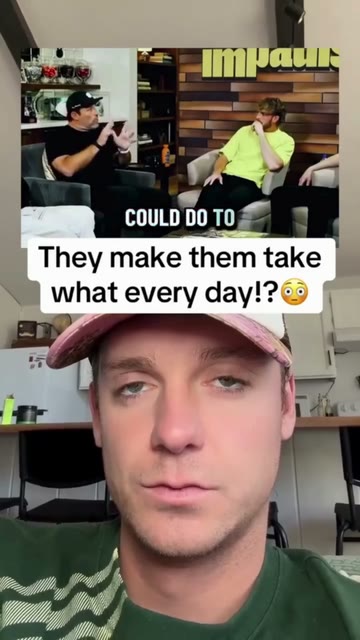
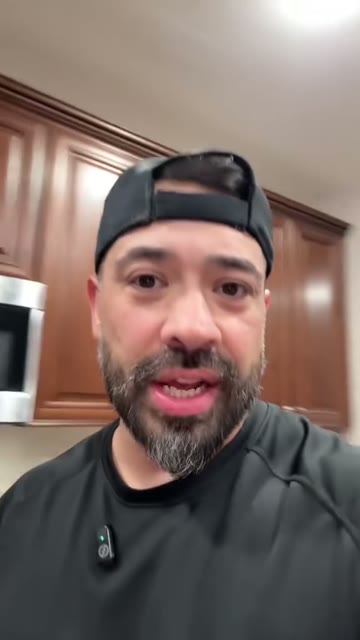
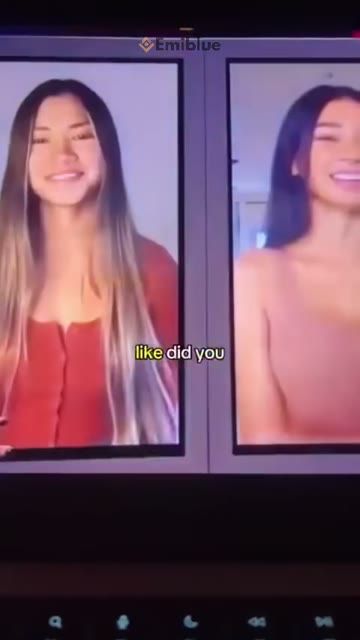
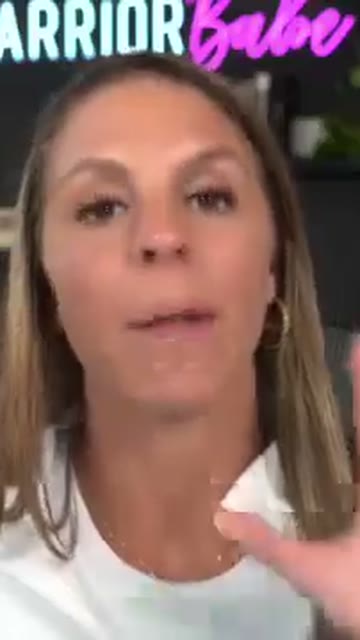
Every podcast-style ad in the count above: 4 likely AI-made and 4 with real people. Tap a picture to open the ad in the Meta Ad Library.
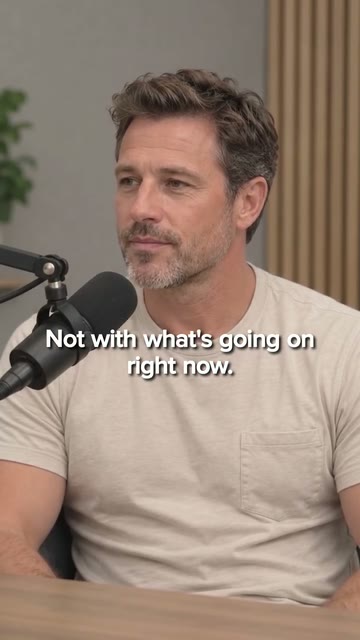
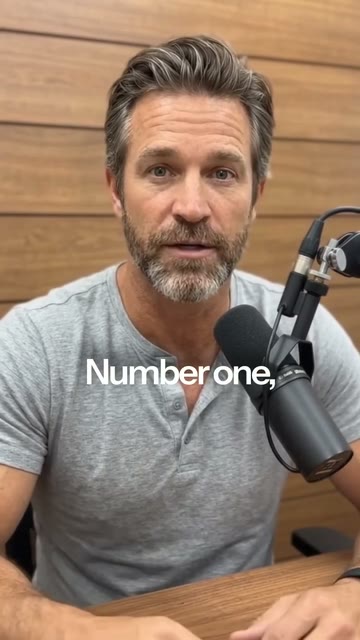
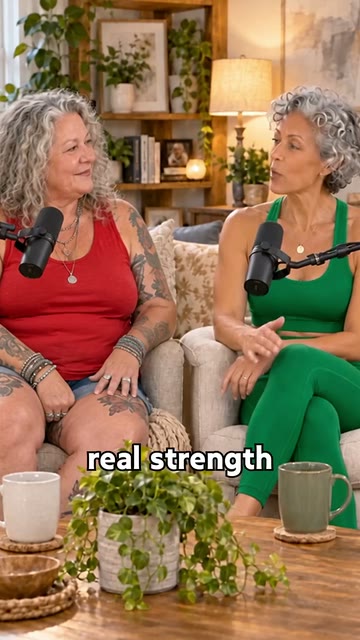
How the likely ads are built
Length
The 4 likely ads run from 1 minute 55 seconds to 3 minutes 40 seconds. The middle is about 3 minutes 30 seconds.
The hook
There is no common line. Two of the four open on the host mid-sentence with no setup.
How the product shows up
It varies. In the PureFlow ad the product is not on screen in any of the ten frames we looked at. In the Drink Jupi ad the host holds the jar from about 66% of the way in.
The look
From ten frames of the PureFlow ad:
- A woman carries the story and a man mostly listens.
- Each host is alone in frame, chest-up, with a boom microphone below the chin. They are never both in one frame.
- Two framings of the same speaker, one tighter and one wider.
- The man is shown listening while her voice carries on.
- Captions are white sentence case, two short lines at chest height, a phrase at a time.
We worked from frames of this ad and not the full video, so we could not measure its cuts, its voice pace or whether it has music.
Our example: a 45-second fake podcast ad
We made the reel at the top of this page for an example brand, Sprigwell, an invented self-watering herb pot.
| Our reel | |
|---|---|
| Length | 43.8 seconds, vertical |
| Shots | 21, about 2.1 seconds each |
| Script | 117 words in 9 turns. Host A has 88 words and host B has 29 |
| Clips made | 9 lip-synced clips, one per line, plus one clip of host B listening |
| Opening | Mid-sentence, no intro and no title |
| Product | Held up at 8 seconds and again at 38 seconds |
| Music | None |
Each long line is cut between a wider and a tighter framing of the same clip. The picture cuts to the next speaker just before their first word.
How we made this reel, step by step
This is the whole process, in the order we did it, with the real pictures and the real prompts. Long prompts are trimmed with "…".
One thing to be clear about: we generated the pictures and clips by calling Pruna's models directly. The reel has no music, and no Ghostfeed credits were used. Ghostfeed has no skill written only for this format, so we followed its skills for the realistic look and for ad copy.
1. Study one real ad
We used the PureFlow ad, the best of the 4 likely ones and the only one with two hosts. We did not keep its video file, so we worked from ten frames and four enlarged frames. Its cuts, its voice pace and its loudness are not measured, and nobody has heard it.
| The real ad, from frames | Our reel | |
|---|---|---|
| Length | 3 minutes 40 seconds | 43.8 seconds |
| Shots | Not measured | 21, about 2.1 seconds each |
| Hosts | A woman who carries the story, a man who mostly listens | The same split: host A has 88 of 117 words, host B has 29 |
| Framing | Each host alone, chest-up, a boom microphone below the chin, never both in one frame | The same |
| Angles | Two framings of the same speaker, tighter and wider | The same, made as punch-ins in the edit |
| Listening shots | The man is shown listening while her voice carries on | Two listening cutaways and a closing reaction |
| Opening | Mid-sentence, no intro, no title | The same |
| Captions | White sentence case, two short lines, chest height, soft shadow, a phrase at a time | The same layout, in Helvetica Neue Bold |
| Product | Not on screen in any of the ten frames | Held up at 0:08 and again at 0:38 |
| Music | Unknown | None |
We copied the structure only. The brand, the product, the words, the hosts' looks and the studio are all different. Theirs is a grey wall with wood slats. Ours is a green wall with cork and a shelf. Holding the product up is our addition, not something copied.
2. Write the script
117 words in 9 turns:
A: I've killed every basil plant I ever bought. Every single one.
B: Same. Mine lasts a week, tops.
A: So my sister hands me this little pot. Sprigwell. There's a water tank in the bottom, and a cotton wick pulls it up to the roots.
B: Wait, so you don't water it?
A: I fill the tank about twice a month. That's it. I went away for ten days, came home, and the basil was bigger.
B: Okay, that's kind of annoying. In a good way.
A: I've got three on the windowsill now. Basil, mint, and one I can't even name.
B: I'm ordering one tonight. What's it called again?
A: Sprigwell. It's just a pot that waters itself. I'll send you the link.
"Twice a month" and "ten days" are made up for a made-up product. For a real brand, use real facts.
3. Make the two host pictures
One picture per host, made with Pruna P-Image at 9:16 (768x1344). We made 4, two of each host, and kept 2.
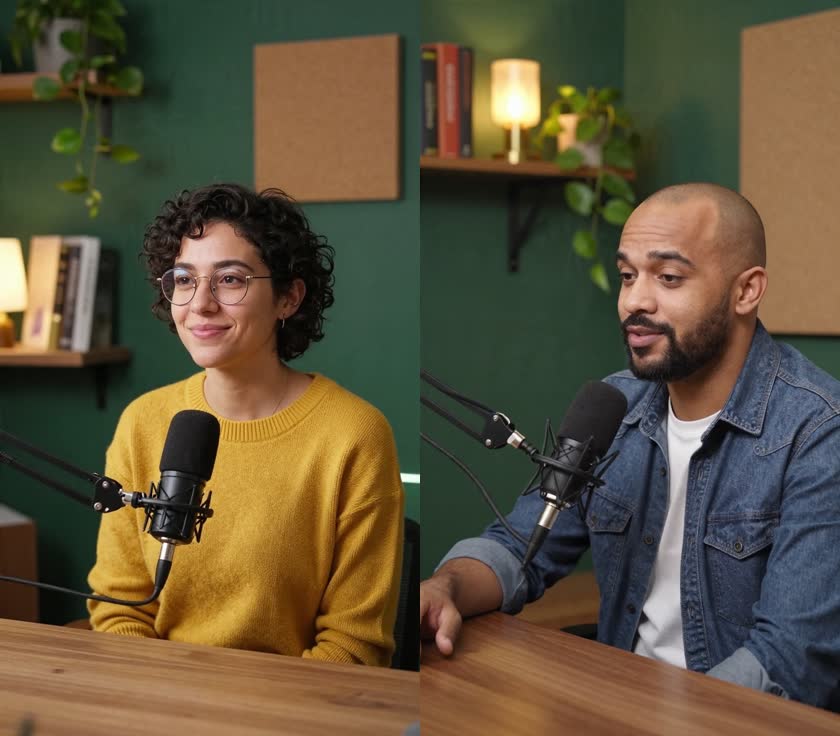 The two host pictures we kept: host A on the left and host B on the right
The host A prompt:
The host B prompt has the same first sentence and the same studio sentence. Only the middle changes: the man, his clothes, and the microphone coming in from the lower left.
We then cropped each picture to a tighter 9:16, so the face is large in a 480p frame.
4. Make the picture of a host holding the product
One picture, made with Pruna P-Image-Edit. The cropped picture of host A goes in as the input, and the prompt tells the model to keep everything and change one thing. The settings were 9:16 and turbo off.
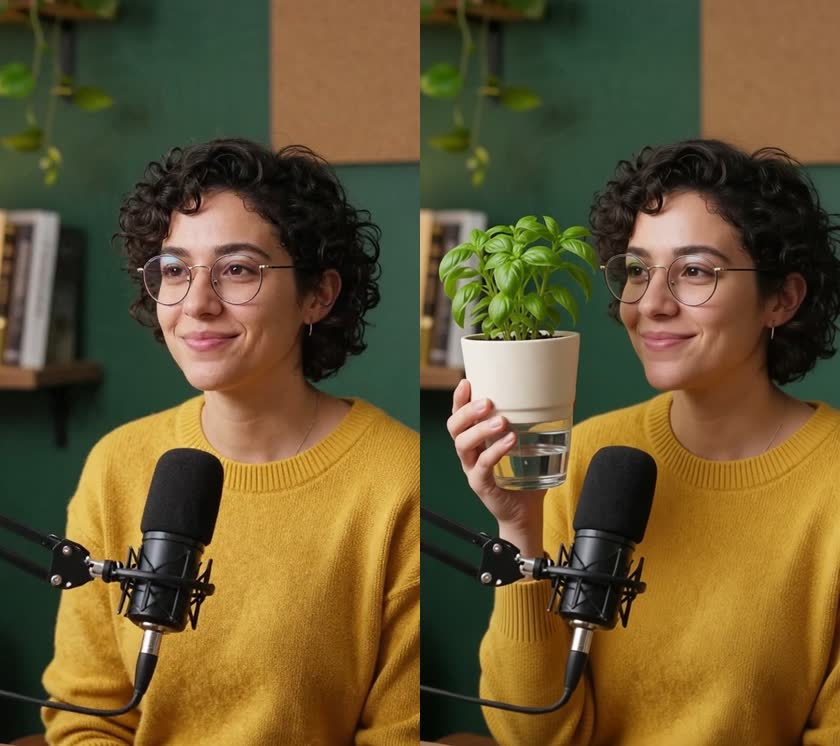 Left: the cropped picture of host A that went in. Right: the edited picture of her holding the pot
That gives three pictures in all: host A, host B, and host A with the pot. Every clip starts from one of them.
5. Turn the pictures into clips
The nine voice lines were made first, one audio file per line (see step 7). A lip-synced clip needs its audio before it can be made.
Nine speaking clips. The model was Pruna P-Video 2 Pro Avatar at 480p. Each clip is one picture plus that line's audio, and comes back as long as the audio, at 480x832 and 24 frames a second. Host A's lines 1, 5 and 7 use her plain picture. Her lines 3 and 9 use the picture with the pot. Host B's lines 2, 4, 6 and 8 use his picture.
The prompt for every host A clip:
One listening clip. Host B with his mouth closed, for cutaways. The model was Pruna P-Video 2 Pro, image to video, at 480p in quality mode, 5 seconds, 9:16:
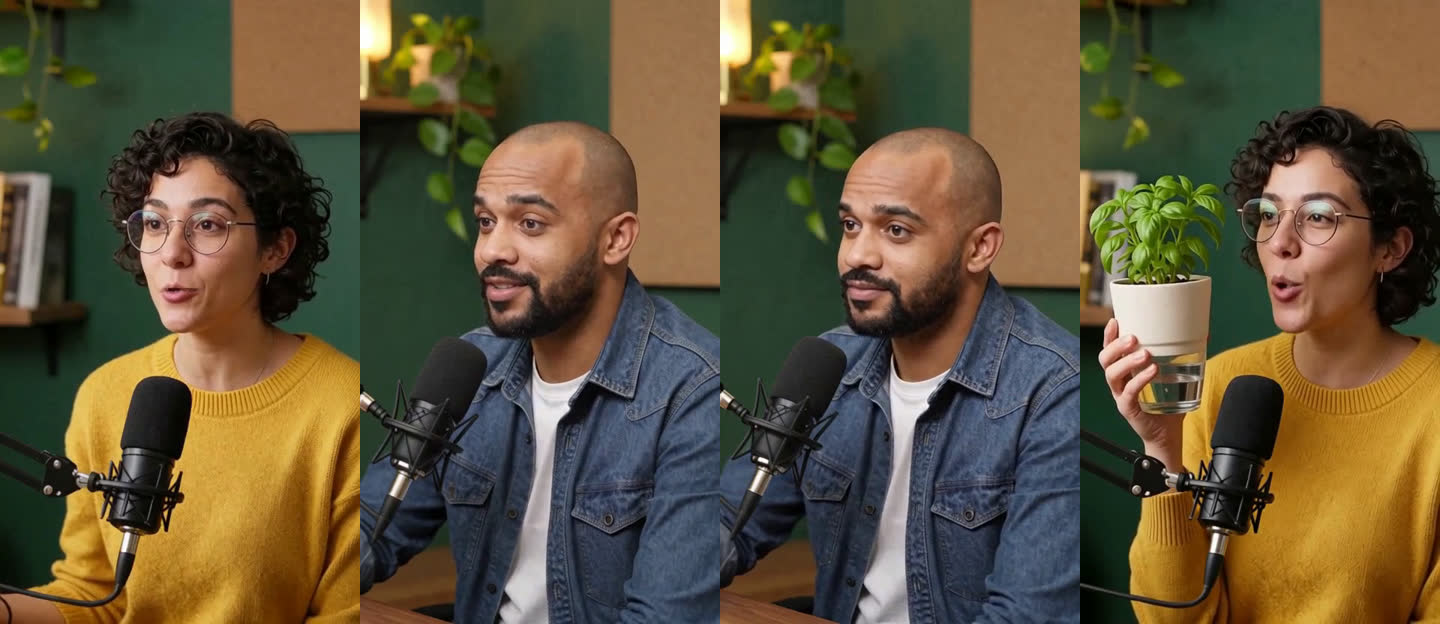 One frame from each of four clips: host A on line 1, host B on line 4, host B in the listening clip, and host A with the pot on line 9
6. Redo what came out wrong
This reel has one retake.
- Line 3, 1 clip. The first take was made from her plain picture, so the pot was only on screen at 0:38. We made the line again from the picture with the pot, so the product appears at 0:08 as well.
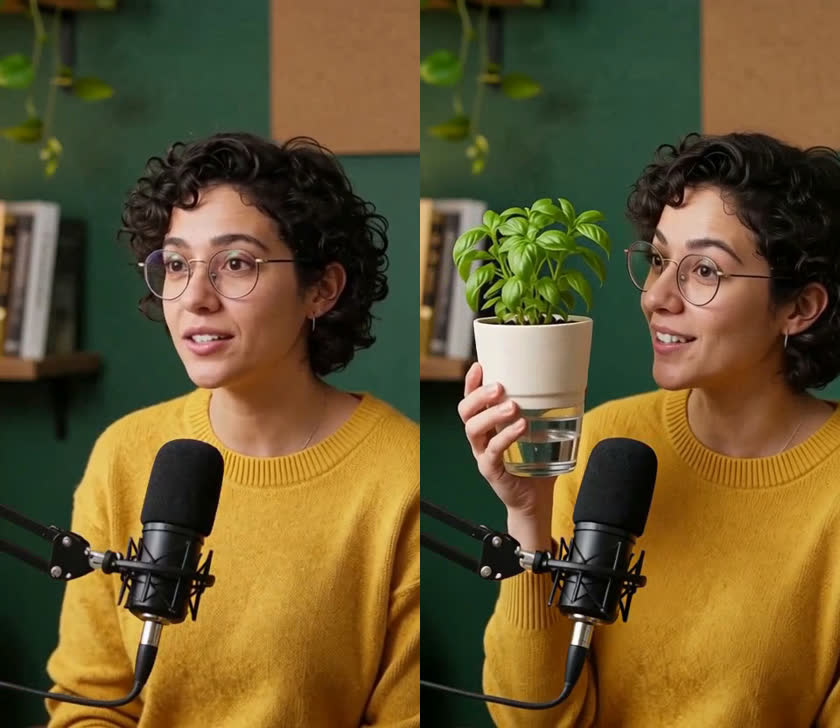 The same moment of line 3. Left: the first take, with no pot. Right: the retake, made from the picture with the pot
Two smaller things:
- Host pictures. We made 4 and kept 2.
- The listening clip. In its first 0.75 seconds his mouth is slightly open, so the edit uses it from 1.0 second on.
The first clip we made, a test of line 2, was good enough to use.
7. Voice, captions and the edit
- Voices. Inworld text to speech (
inworld-tts-2), voice Naomi for host A and voice Wade for host B, at normal speed, with word timings. One file per line. - Music. None.
- The edit. Done with ffmpeg. 21 shots, 2.1 seconds on average, and the longest is 3.5 seconds. There are 0.36 seconds between turns, and the picture cuts to the next speaker 0.12 seconds before their first word. Each long line is split into a wide and a tight framing, a 1.22 times punch-in, with a slow 2% push.
- Listening cutaways. At 11.4 to 12.4 seconds and 20.6 to 22.3 seconds. The reel ends on host B smiling.
- Captions. 32 phrases, set by hand per line and timed from the voice's word timings.
- Scaling and mix. The clips were scaled from 480x832 to 1080x1920 with a light sharpen. The mix is at -15.3 LUFS.
8. What it really cost us
This is what we paid to make the reel by calling the models directly, counted from Pruna's list prices and the lengths of the clips that came back. It is not read from an invoice.
| What | Number | Dollars |
|---|---|---|
| P-Image host pictures: 2 kept, 2 not used | 4 | 0.02 |
| P-Image-Edit picture: host A holding the pot | 1 | 0.01 |
| P-Video 2 Pro Avatar clips, 480p, at $0.02 a second: 9 used, 1 not used | 10 | 0.94 |
| P-Video 2 Pro listening clip, 480p quality, 5.17 seconds at $0.04 a second | 1 | 0.2067 |
| Pruna total | 1.177 | |
| Voice, 10 requests, about 650 characters | about 0.02 | |
| Ghostfeed credits | 0 | 0 |
| Total | about 1.20 |
The voice figure is an estimate, counted at $25 per million characters. We did not read Inworld's price list.
The same ad priced in Ghostfeed credits is in the cost section below.
9. The finished reel
Made with GhostfeedHow to make one in Ghostfeed
Ghostfeed connects to Claude, ChatGPT, Codex and Cursor through one MCP server. Setup takes a couple of minutes. You ask for the ad in plain words, and you ask for lip sync, because it is only used when you ask:
Ghostfeed has no separate method for this format. The agent uses the method for the realistic look and for ad copy, and works through these steps.
- Write the conversation. Short spoken lines in turns. One host carries the story and the other reacts. The hook opens a question, and the last line names the product. About 115 words for 45 seconds.
- Make one picture per host. The same studio description in both: one light you can point to, a lived-in set, a microphone below the chin. Frame them tight, so the face is large.
- Make one picture of a host holding the product.
- Make the voices. Two different voices, one audio file per line.
- Make one lip-synced clip per line. Each clip is that host's picture plus that line's audio, and comes back as long as the audio.
- Make one listening clip. The other host, mouth closed, for cutaways.
- Put it together. Cut between speakers, add the tighter framings, the listening cutaways and the captions.
What a 45-second one costs
Counting a credit as 10 cents, with today's prices and the settings our reel used:
| Part | Credits |
|---|---|
| 2 host pictures, 1 credit each | 2 |
| 1 picture of a host holding the product, made from her picture | 2 |
| 9 lip-synced clips, about 39 seconds in all, at 0.5 credits a second | about 19.5 |
| 1 listening clip of 5 seconds at 0.75 credits a second | 3.75 |
| Voices, about 650 characters as one take (1 credit per started 1,000) | 1 |
| Total | about 28.5, around $2.85 |
Three notes on that table:
- This is the cheapest format we made. There are only 3 pictures, and a lip-synced clip is billed for the length of its line, not for a 5-second minimum.
- 0.5 credits a second is P-Video 2 Pro Avatar at 480p. At 768p it is 0.75.
- The voices are 1 credit as one take. Made as nine separate requests they are 9 credits, which brings the total to about 36.5.
We redid one clip, the line where she first holds the pot. For our reel we also made 4 host pictures to keep 2.
Ghostfeed is paid, from $29/mo.
Honest limits
What is still wrong with our own reel:
- The voices are too clean. Each line was read on its own. There is no overlap, no laughing over each other, no "mm-hm" under the other host and no room sound. A real podcast clip has all of these. This is the biggest gap in feel.
- It is soft on a large screen. The clips are 480p scaled up, and the tighter framings are cropped further. Hair and the foam of the microphone show it most.
- The pot comes and goes. She holds it in two lines and not in the two between, with no shot of her putting it down.
- One camera angle per host. The tighter framing is a crop, not a second camera.
- One listening clip. His three listening moments all come from the same 5 seconds, and she is never shown listening.
- The two hosts are never in one frame. The studio matches by description, not as one shared set.
We made this reel at 480p, the lowest resolution, in low-cost settings. Higher-end video models and a higher resolution reduce the picture problems in this list. We have not measured by how much.
What to expect from the tool:
- Each line is its own clip. In Claude Code, Codex, Cursor and the Ghostfeed app the clips are joined into one file. In Claude and ChatGPT chat you get the clips in order and join them yourself.
- Lip sync is only used when you ask for it.
- The agent cannot hear the voices, so you choose them by listening.
- The ads we found in this format run 2 to 4 minutes. A 45-second one is a short clip of the format.
- Use invented hosts. Do not make a clip that puts words in a real person's mouth.
FAQ
What is a fake podcast ad?
A video ad made to look like a clip from a podcast: hosts at microphones, mid-conversation, talking about a product.
Do real brands run AI fake podcast ads?
Podcast-style ads are running. We found 4 that are likely AI-made, from PureFlow, Drink Jupi, Yoga-Go and Respyria, and none that we could prove from the picture alone.
How long are they?
The 4 likely ones run from 1 minute 55 seconds to 3 minutes 40 seconds.
Does it need two hosts?
No. One of the four likely ads has a single host at a microphone for the whole ad. Two hosts let one of them ask the viewer's questions.
How much does one cost to make?
About 28.5 credits for 45 seconds in Ghostfeed at 480p, around $2.85 at 10 cents a credit, before redos.
Make this format with the Ghostfeed skill
No skill on the Ghostfeed MCP server is written only for fake podcast ads. The format is covered by three skills that work together:
ghostfeed-video-adscovers the order of work for any video ad: the words, the reference pictures, the sound, a start picture for each clip, the clips, and putting them together. It also says that lip sync is used only when you ask for it.ghostfeed-ad-style-realisticcovers the look: one light source you could point to, a lived-in place, a named camera and small imperfections such as skin texture.ghostfeed-ad-copycovers the script: short spoken lines, a hook that opens a question, and a closing line that names the product.
Connect Ghostfeed to Claude or ChatGPT, ask for a podcast-style ad for your own brand with two hosts and lip-synced lines, and the agent reads these skills and runs the same steps: the conversation, one picture per host, the voices, one speaking clip per line.
Our reel was made by hand along those steps, with Pruna's models called directly. The skills run the same steps inside Ghostfeed, with the models Ghostfeed offers.