A drama ad is a short soap opera. A woman tells a story in the first person: a family member slights her, she is alone with it, a friend hands her the product, and at the next family event the tables turn. In the realistic look, the people look filmed. Brands are running it right now as an AI-made ad. On November 17, 2026 we counted 7 clearly AI-made realistic drama ads from 6 advertisers in the Meta Ad Library. You can make a 45-second version in Ghostfeed for about 58 credits, around $5.80.
Below: what the real ads look like, our own example, the steps, the cost and the limits.
Made with GhostfeedThe smoked salt in this reel, Cinderpinch, is an example brand. It is not a real product.
The pictures and clips in this reel were generated with Pruna AI models, called directly and following the steps of Ghostfeed's workflow: P-Image for the first pictures, P-Image-Edit for the pictures made from them, P-Video 2 Pro for eight clips, and P-Video 2 Pro Avatar for the lip-synced last clip.
What a drama ad is
It is a story first and an ad second. The viewer stays to find out what happens to the person, and the product is the thing that changes the ending.
People call it "drama ads", "AI drama ads", "micro-drama", "AI story ad" or "AI soap opera ad". The same stories also run as cartoons. That version has its own page: Pixar-style drama ads.
These ads run on Meta (Facebook and Instagram). That is where we counted them.
How many brands run it
These are our own numbers, counted on November 17, 2026 in the public Meta Ad Library. We looked at ten frames across each ad.
| What we counted | Number |
|---|---|
| Realistic drama ads we looked at | 10 |
| Clearly AI-made | 7 |
| Likely AI-made, not counted | 3 |
| Filmed for real | 0 |
| Advertisers behind the 7 | 6 |
| Beauty | 3 of 7 |
| Fitness app | 2 of 7 |
| Supplements, jewellery | 1 each |
The 6 advertisers: Yoga-Go, Resilia, Real Women Real Stories, Korean Beauty Insider, Smooche and Avera. Several run from a page with another name. Resilia's ad is on the page Arterial Health Review, and Smooche's is on Cosmetic Times.
Three things worth knowing about these numbers:
- How we told they are AI. In 6 of the 7, the lead is a visibly different person from shot to shot: the face, the age or the hair changes. In the seventh, a second woman's head is fused behind the lead in one frame.
- One of them is reused a lot. Avera's pendant ad is marked as used by 30 ads.
- The Ad Library shows no spend and no views. We can say an ad is running. We cannot say how well it does.
The 7 realistic drama ads we found
Every ad in the count above, as the Meta Ad Library showed it on November 17, 2026. Tap a picture to open the ad in the Library.
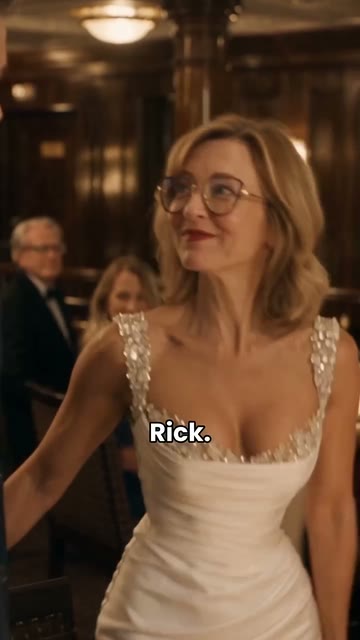
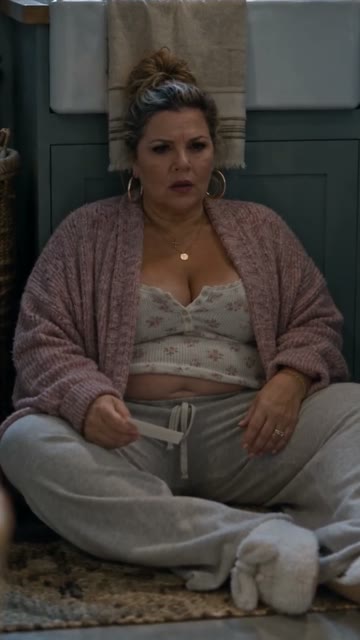
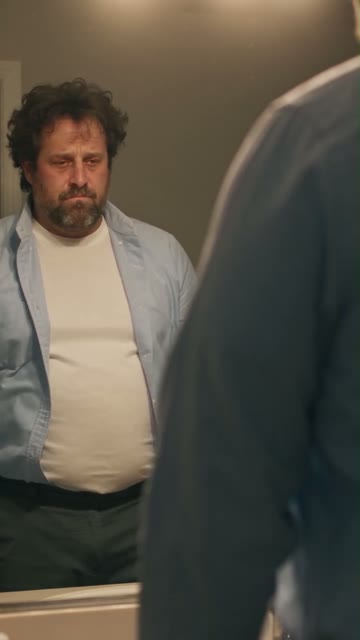
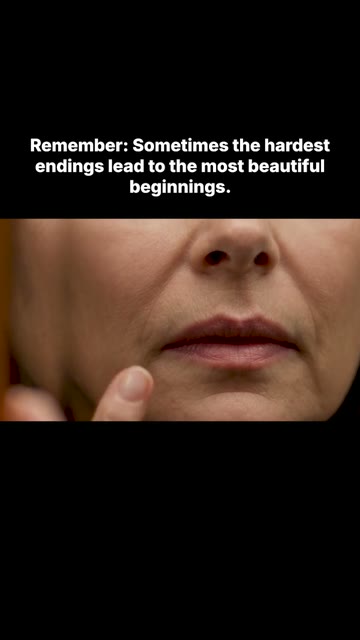
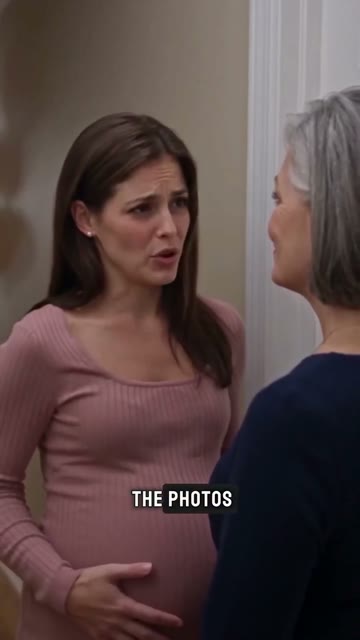
How the real ads are built
Length
These ads are long. The shortest of the 7 is 5 minutes 42 seconds and the longest is 10 minutes 46 seconds. The middle one is 7 minutes 4 seconds. The shortest likely one we saw is 2 minutes 21 seconds. Nothing in this format is near 45 seconds.
The hook
Across the 13 drama ads we counted in both looks, 9 open on a husband, an ex or a family member humiliating the lead over her looks or her age. The other 4 open on weight shame. The slight happens at a family event: a baby shower, Christmas, a move.
How the product shows up
Late, and never in the first fifth of the ad. Across the 13:
- The earliest product is about 24% of the way in.
- In 5 of the 13 it is past 60%.
- In 2 of those, the pack is only in the last frame.
In Avera's ad the pendant is worn at about 45% and the gift box appears at about 55%.
Story beats
Avera's 10 minute 46 second ad, read from ten frames and its ad text:
- A family member slights the older woman at a family event.
- Years of quiet effort.
- Alone afterwards.
- A friend who has the product.
- The product arrives.
- Someone notices it at the next family event.
- The daughter-in-law softens. A hug.
- The narrator talks to the camera with the product.
Captions are bold condensed capitals, white with a black outline, 3 or 4 words at a time in the lower third. We could not count its shots or time its cuts, because we worked from ten frames of this ad and not the full video.
Our example: a 45-second drama ad
We made the reel at the top of this page for an example brand, Cinderpinch, an invented smoked finishing salt. Food is a new category for this format, picked so the reel makes no health or beauty claim.
| Our reel | |
|---|---|
| Length | 45.4 seconds, vertical |
| Shots | 12, from 9 clips |
| Voice | One first-person narrator, 111 words, one line per clip |
| Hook | "My daughter-in-law asked me not to cook for Thanksgiving this year." |
| Product | First seen at 37%, in use at 45% |
| Last line | Spoken to the camera, with her lips matching the narrator's voice |
| Faces | The same two women in every scene, each from one locked picture |
That last row is where ours differs from the real ads on purpose. In Avera's ad the narrator is a different woman in six of ten frames. Ours keeps Ruth and Dana the same throughout.
How we made this reel, step by step
This is the whole process, in the order we did it, with the real pictures and the real prompts. Long prompts are trimmed with "…".
One thing to be clear about: we generated the pictures and clips by calling Pruna's models directly, and the music through Ghostfeed. The steps are the ones Ghostfeed's skills for a realistic video ad set out.
1. Study one real ad
We took Avera's pendant ad as the reference and set ours beside it. We did not have the full video, only ten frames of it and its ad text. So we could not count its shots, time its cuts or hear it.
| The real ad | Our reel | |
|---|---|---|
| Length | 10 minutes 46 seconds | 45.4 seconds |
| Shots | Not measured. We had ten frames, not the video | 12, from 9 clips |
| Hook | A family member slights the older woman at a family event | The same kind of slight, at a new event: Thanksgiving |
| Product first appears | Worn at about 45%, the box at about 55% | 37% (clip 4 of 9), in use at 45% |
| Voice | A first-person story told by the older woman. The last frame shows her talking to the camera | The same: one first-person narrator, and she speaks the last line to the camera |
| Captions | Bold condensed capitals, white with a black outline, 3 or 4 words at a time, lower third | The same layout, in our own font |
| Same faces in every shot | No. The narrator is a different woman in six frames | Yes, from one locked picture each for Ruth and Dana |
No realistic drama ad we counted is near 45 seconds. So our reel is the shape of Avera's story squeezed into 45 seconds, not a match in length.
We copied the structure only. The brand, the product, the people, the story and the words are all new.
2. Write the script
111 words, one line per clip:
My daughter-in-law asked me not to cook for Thanksgiving this year.
Thirty years, I made that dinner. She said the kids find my food bland.
I drove home with my casserole still warm on the passenger seat.
My friend Pearl didn't say sorry. She slid a little green tin across the table.
Smoked salt, she said. My mother's trick. One pinch, right at the end.
So I showed up anyway. One dish. And I said nothing.
My grandson took one bite. Then he asked for thirds.
Later she found me in the kitchen, and asked me to teach her.
It's called Cinderpinch. I don't share my recipes. But I'll share this.
It has no numbers about the product and no result claims.
3. Lock the two women and the product
Three pictures that the scenes are made from: Ruth, her daughter-in-law Dana, and the tin. All three were made with Pruna P-Image at 9:16. We made 2 of each and picked one.
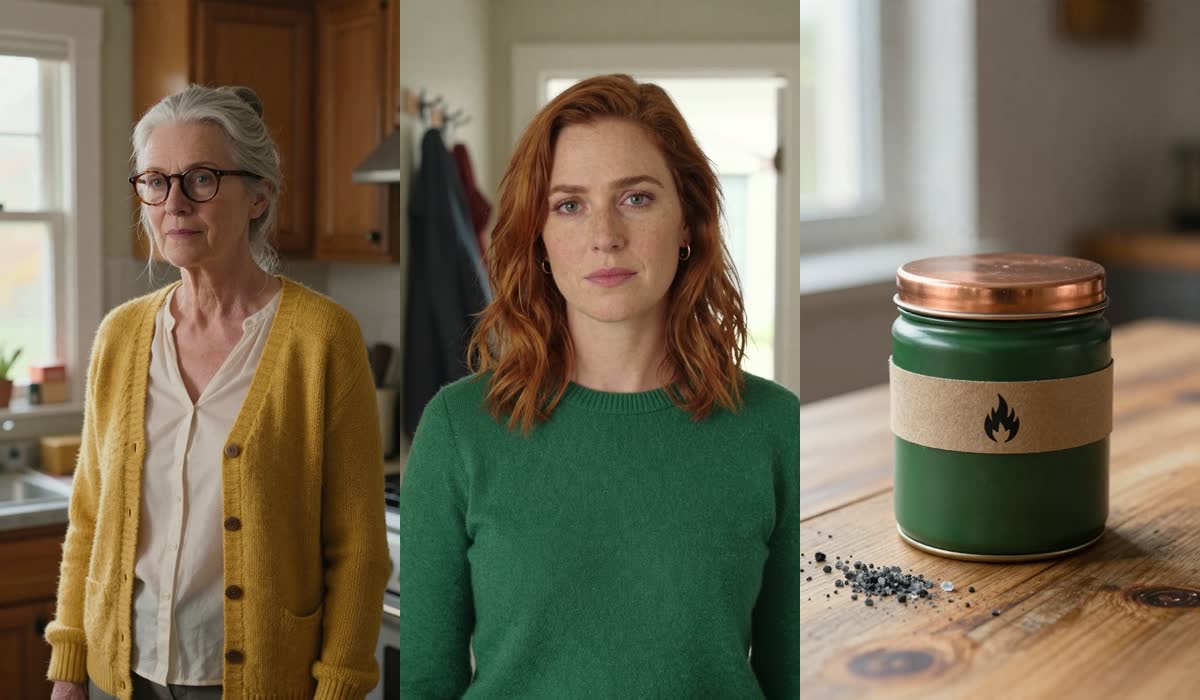 The three locked pictures: Ruth on the left, Dana in the middle and the Cinderpinch tin on the right
The prompt for Ruth:
The prompt for the tin:
Pearl and the grandson appear once each, so they have no locked picture. They are only described in their scene's prompt.
4. Make one scene picture per line
Nine scene pictures, one per line of the script. Eight were made with Pruna P-Image-Edit. The locked pictures go in as image 1, image 2 and image 3, and the prompt says which person or object each one is. The settings were 9:16 and turbo off, with 1 to 3 locked pictures sent at 576x1008. The grandson's picture has nobody from the locked pictures in it, so it was made from words with P-Image.
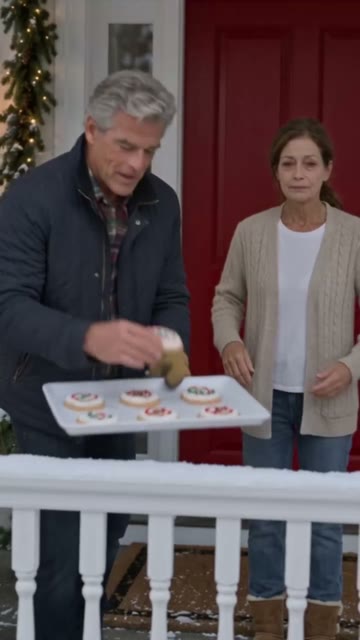
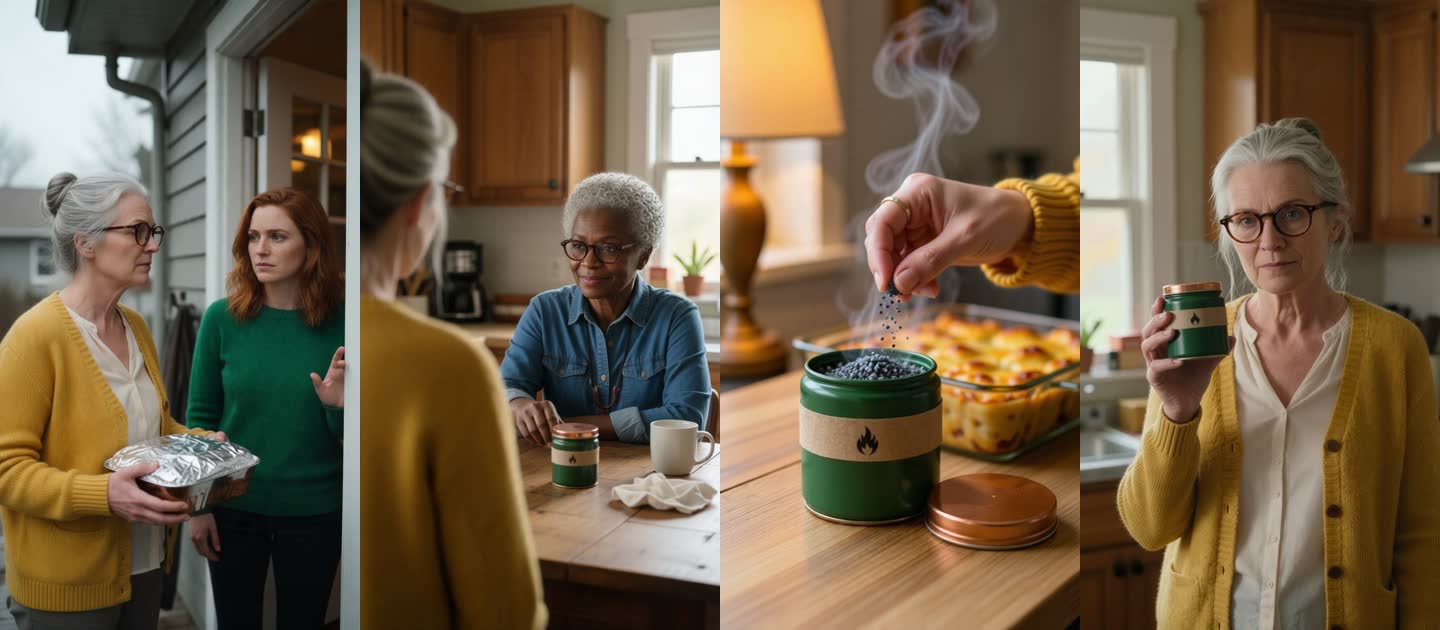 Four of the scene pictures: the doorstep, Pearl sliding the tin across the table, the pinch of salt over the casserole, and Ruth facing the camera with the tin
The doorstep picture, made from the locked pictures of Ruth and Dana:
Every scene prompt opens with the same sentences about the look and about who is in the picture. Only the part after "Scene:" changes.
5. Turn each picture into a clip
Each scene picture is the first frame of one clip.
Clips 1 to 8 were made with Pruna P-Video 2 Pro, image to video, at 480p in quality mode, 5 or 6 seconds, 9:16. 480p is the lowest resolution the model offers. The clips come back at 480x832.
The fourth clip, where Pearl hands over the tin:
Clip 9 is different. Ruth says the last line to the camera, so it was made with Pruna P-Video 2 Pro Avatar at 480p. That model takes one picture and a piece of speech and moves the mouth to match. We gave it the scene picture and 5.5 seconds of the narrator's own voice, cut from the voiceover. Its prompt:
P-Video 2 Pro also returns its own sound with every clip. We threw that sound away.
6. Redo what came out wrong
There was one pass, with retakes as we went. In the order we fixed them:
- Scene picture 1, 1 retake. Dana was tiny in the doorway and waving.
- Scene picture 8, 2 retakes. Two tins in one room, twice. The third take was an edit of the second that only removed the tin on the counter.
- Clip 6, 1 new picture and 1 new clip. Ruth had no dish in her hands.
- Clip 2, 1 retake. A cloud of steam covered her face.
- Clip 9, 1 retake. She looked startled while talking.
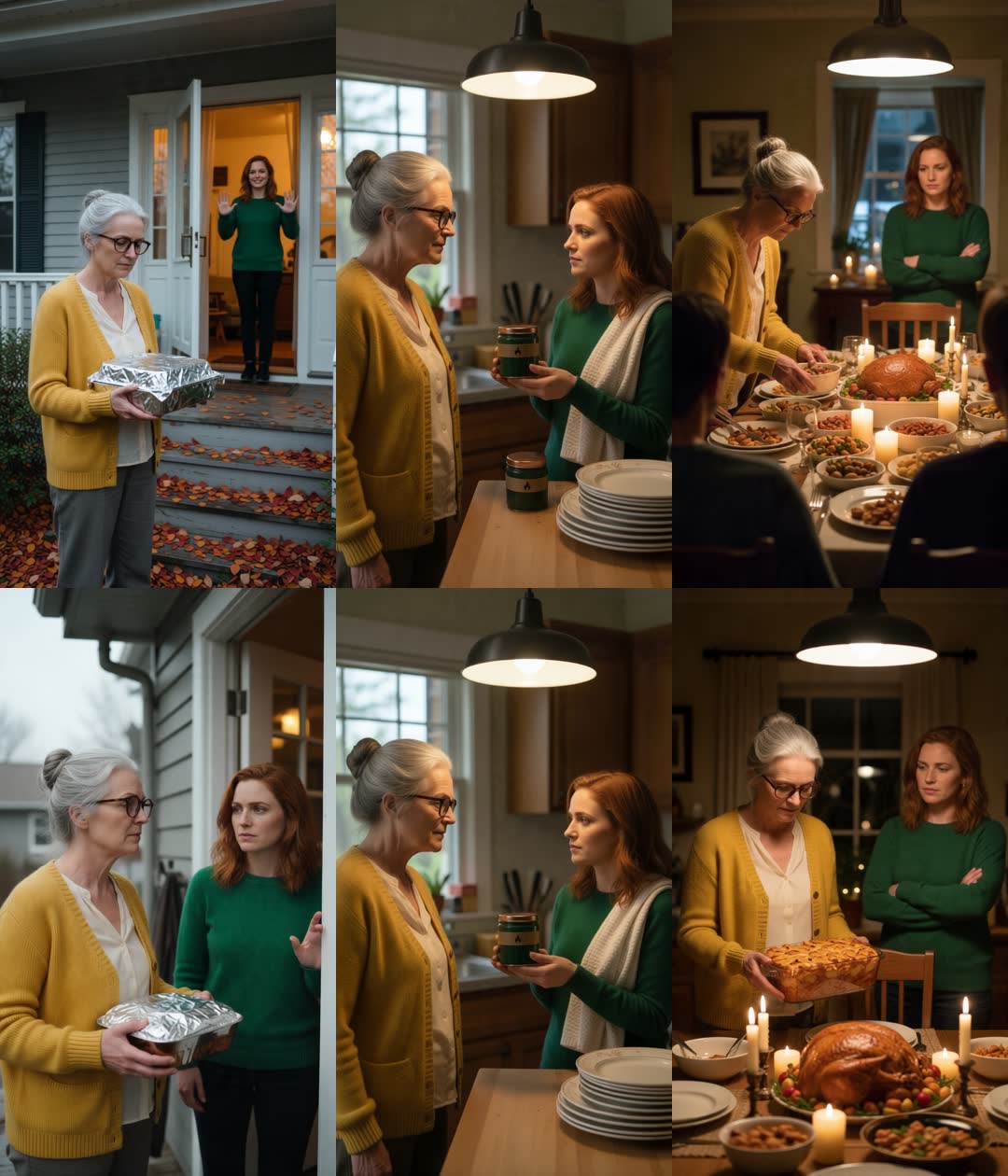 Top row, the first takes: Dana tiny and waving at the door, a second tin on the counter, and the first dinner table picture. Bottom row, the pictures we kept for the same three scenes
In all we made 19 pictures and 12 clips, and the reel uses 9 clips. Three picture requests were refused before anything was made, because the locked pictures we sent were too large. Sending them at 576x1008 fixed it.
One fault we saw and did not redo: Ruth's face drifts between scenes.
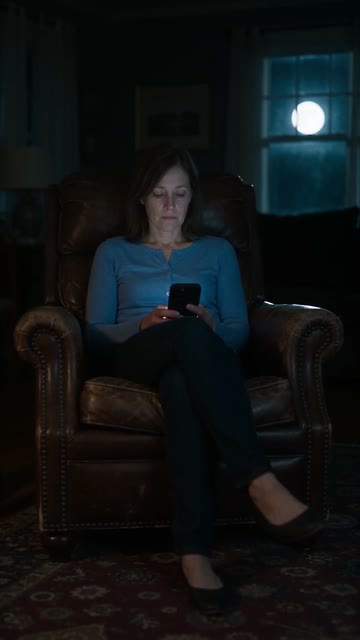
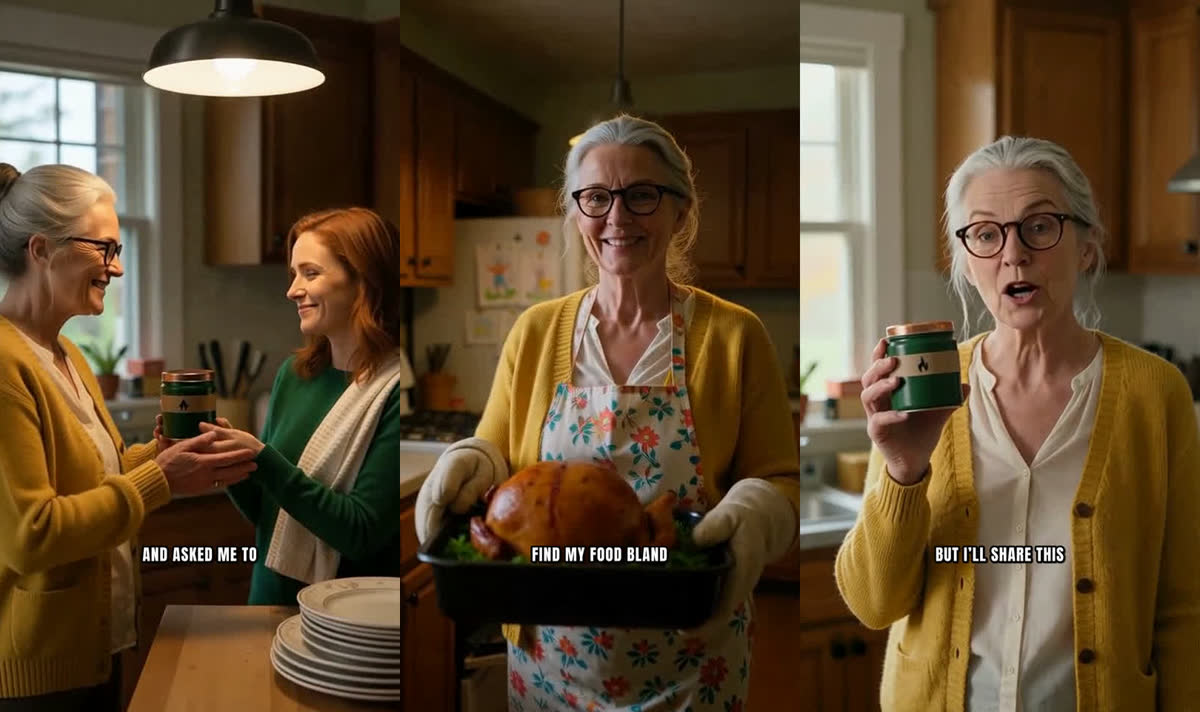 Three frames from the finished reel, with captions: Ruth and Dana in the kitchen, Ruth in the turkey flashback, and Ruth in the last clip. She looks younger and rounder in the flashback and thinner in the last clip
7. Voice, music, captions and the edit
- Voice. Inworld text to speech, voice Loretta, at a speaking rate of 0.9, with word timings. We made three takes: Loretta and Naomi at rate 1.0, and Loretta at 0.9. Rate 1.0 came out at 37 seconds, too fast for a drama. Rate 0.9 gave 42.6 seconds. The choice was made from Inworld's description of the voice and from the pace, not by listening.
- Music. Made through Ghostfeed, 1 credit, instrumental, 50 seconds. The prompt: "Tender cinematic family-drama underscore, solo felt piano with soft warm strings, 72 BPM, bittersweet opening that lifts to hopeful, intimate, minimal". We got two versions and used the first.
- The edit. Done with ffmpeg. A pause of 0.2 seconds is added before each line. Clips 1 to 8 run at 0.86 to 1.14 times speed to fit their lines. Clip 9 runs at real speed so the lips stay in step. Three closer crops of the same clips, on Ruth, on Pearl and the tin, and on Dana, turn 9 clips into 12 shots.
- The last second. The lip-synced clip is 5.5 seconds and its scene needs 6.4 seconds. The last second is a held frame with a slow zoom and a fade.
- Picture size. The clips are scaled up from 480x832 to 1080x1920, with a light sharpen.
- Captions. Bold capitals in the font Anton, 3 or 4 words at a time, in the lower third.
- Mix. The music sits about 15 dB under the voice.
8. What it really cost us
This is what we paid to make the reel by calling the models directly, counted from Pruna's list prices and the clip lengths that came back. It is our own log, not read from an invoice.
| What | Number | Dollars |
|---|---|---|
| P-Image pictures: 2 of Ruth, 2 of Dana, 2 of the tin, 1 scene | 7 | 0.035 |
| P-Image-Edit pictures: 8 scenes, 4 retakes | 12 | 0.12 |
| P-Video 2 Pro clips, 480p quality: 8 used, 2 thrown away | 10 | 2.18 |
| P-Video 2 Pro Avatar clips, 480p: 1 used, 1 thrown away | 2 | 0.22 |
| Voice, 3 takes of 595 characters | about 0.045 | |
| Music, 1 Ghostfeed credit | about 0.10 | |
| Total | about 2.70 |
The voice figure is an estimate at $25 per million characters. We did not re-read Inworld's price list. Pruna bills the length that comes back: a 5-second clip comes back at 5.17 seconds and a 6-second clip at 6.58 seconds. The three refused picture requests are counted as not charged.
The same ad priced in Ghostfeed credits is in the cost section below.
9. The finished reel
Made with GhostfeedHow to make one in Ghostfeed
Ghostfeed connects to Claude, ChatGPT, Codex and Cursor through one MCP server. Setup takes a couple of minutes. You ask for the ad in plain words:
The agent reads Ghostfeed's method for the realistic look and works through these steps.
- Write the story. A slight, the low point, the product handed over, the turn. One line per clip. About 110 words for 45 seconds.
- Lock each main person and the product. One picture each. People who appear once are only described.
- Make the voiceover first, and never cut it. Each clip fills the time from its line's first word to the next line's first word.
- Make one start picture per line. Realism is won here: one light source you can point to, a lived-in room, skin texture, a little grain.
- Turn each picture into a clip. Small real actions, and a different camera angle from scene to scene.
- Optional: one lip-synced line. If you ask for it, the last line can be spoken to the camera, using the narrator's own voice so it is the same woman.
- Put it together. Join the clips, lay the voiceover and music on top, and add the captions.
What a 45-second one costs
Counting a credit as 10 cents, with today's prices and the settings our reel used:
| Part | Credits |
|---|---|
| 4 pictures made from words (two people, the tin, one scene), 1 credit each | 4 |
| 9 pictures made from those, 2 credits each | 18 |
| 8 clips, 42 seconds in all, at 0.75 credits a second | 31.5 |
| 1 lip-synced clip of 5.5 seconds at 0.5 credits a second | about 3 |
| Voiceover, 595 characters (1 credit per started 1,000) | 1 |
| Music, one song request | 1 |
| Total | about 58, around $5.80 |
Three notes on that table:
- 0.75 credits a second is P-Video 2 Pro at 480p in quality mode. Real-looking faces need the better mode. At 768p the same mode is 1 credit a second.
- This is the most expensive of our 480p reels, because every clip is in quality mode.
- Redos cost again. For our reel we made 19 pictures to keep 13, and 12 clips to keep 9.
Ghostfeed is paid, from $29/mo.
Honest limits
What is still wrong with our own reel:
- It is not the real length. The real ads tell this story over 5 to 11 minutes. Ours gives each beat one 5-second clip, so the hurt, the turn and the make-up go by fast. It shows the format. It does not show what holds a viewer for minutes.
- The picture is soft. The clips are 480p scaled up. Faces are fine on a phone and visibly soft on a desktop.
- The same cardigan in every scene. It kept Ruth's look stable, including in a flashback meant to be years earlier.
- Her face drifts a little. She looks younger in the flashback and thinner in the last clip.
- Small glitches. The last second is a held frame, the grandson's plate is a whole casserole, and the mark on the tin changes shape slightly.
- No offer. The real ad closes with where to buy. An example brand has no honest offer or review to show.
We made this reel at 480p, the lowest resolution, in low-cost settings. Higher-end video models and a higher resolution reduce the picture problems in this list. We have not measured by how much.
What to expect from the tool:
- Each line is its own clip. In Claude Code, Codex, Cursor and the Ghostfeed app the clips are joined into one file. In Claude and ChatGPT chat you get the clips in order and join them yourself.
- Lip sync is only used when you ask for it.
- The agent cannot hear the voiceover, so you choose the voice by listening.
- A ten-minute drama is many more clips. The cost grows with the length.
FAQ
What is a drama ad?
A video ad told as a short first-person soap opera: someone is slighted, the product arrives late, and the tables turn.
Do real brands run AI drama ads?
Yes. On November 17, 2026 we counted 7 clearly AI-made realistic ones from 6 advertisers in the Meta Ad Library, and 6 more in a Pixar-style look.
How long are they?
The 7 realistic ones run from 5 minutes 42 seconds to 10 minutes 46 seconds. The middle one is 7 minutes 4 seconds.
When does the product appear?
Never in the first fifth. The earliest we saw is about 24% of the way in, and in 5 of 13 drama ads it is past 60%.
How much does one cost to make?
About 58 credits for a 45-second version in Ghostfeed at 480p, around $5.80 at 10 cents a credit, before redos.
Make this format with the Ghostfeed skill
There is no skill written only for drama ads. The format is covered by three skills on the Ghostfeed MCP server: ghostfeed-ad-style-realistic for the look, ghostfeed-ad-copy for the script, and ghostfeed-ad-characters for keeping the people and the product the same from scene to scene. They work together with ghostfeed-video-ads, which covers the order of work for any video ad. Connect Ghostfeed to Claude or ChatGPT, ask for a realistic drama ad for your own brand and tell it the story, and the agent reads those skills and runs the same steps: the script, one locked picture per person and product, one scene picture per line, one clip per picture.
Our reel was made by hand along those steps, with Pruna's models called directly and the music made through Ghostfeed. The skills run the same steps inside Ghostfeed, with the models Ghostfeed offers.